
Wine Tours in Tuscany - About Angie - +39 3333185705 - angie.chianti@gmail.com

Updated November 2025 by Angela, certified sommelier & founder of Tuscany Tour Time
Tuscany in Harvest Season
If you could fly over Italy in September — broomstick-style, like in Harry Potter — you’d see an entire country in motion. From Sicily to Trentino, from Piedmont to Puglia, people are harvesting grapes.
The colors and shapes of the vineyards change from region to region, yet the rhythm is the same everywhere: a mix of effort, passion, and tradition.
Tuscany, with its rolling hills, cypress roads, and patchwork vineyards, is the heart of this ritual.
It’s home to world-famous wines — Chianti Classico, Brunello di Montalcino, Vino Nobile di Montepulciano, Vernaccia di San Gimignano, and modern Super Tuscans. But behind each bottle, there’s a choice that defines everything: industrial precision or artisanal care.
This is where the real difference between big wineries and small boutique wineries begins.
How Big Wineries Work
Large estates are often impressive at first glance — centuries-old castles, manicured gardens, glass-walled tasting rooms, and panoramic terraces overlooking endless vines. These places have mastered efficiency, logistics, and scale.
But behind the elegance, the reality is quite industrial.
In large wineries, the harvest is usually mechanical: a machine moves quickly between rows, shaking the vines to separate bunches from stems. It’s fast and cost-effective , but it also means no human hand is selecting which grapes are ready and which aren’t.
These machines collect everything they find: ripe clusters, unripe berries, leaves, and sometimes even small creatures that live among the vines , bees, butterflies, lizards. There’s no gentle touch, no pause, no intuition.
After the mechanical harvest, grapes move into stainless-steel tanks, where everything is automated and controlled with precision.
At this level, vineyards are managed as large scale agricultural businesses. With hundreds of hectares, it’s nearly impossible to inspect every vine. So to prevent disease, many rely on chemical sprays, pesticides, and herbicides, which “keep order” but reduce biodiversity and can affect soil health. Few large wineries are certified organic simply because managing organics across vast land is extremely complex and expensive.
That doesn’t mean the wines are bad, far from it. Many big wineries produce technically perfect wines, often aged in beautiful cellars with impressive barrel rooms. Their flagship labels, such as Chianti Classico Gran Selezione, Amarone della Valpolicella, or Super Tuscans from Bolgheri, can be world-class.
But when it comes to experience, something essential is missing: intimacy.
Visitors are one of dozens, sometimes hundreds, each day. Tours follow a strict schedule; groups move through scripted routes; tastings happen in sleek, spacious rooms led by trained staff who might be passionate or might simply be doing their job.
You learn a lot, but you rarely feel connected.
The Soul of Small Wineries
Now imagine turning off the main road, following a narrow cypress-lined path, and arriving at a quiet family run estate. Chickens wander near the vines. Someone’s nonna is cooking lunch in the kitchen. The winemaker greets you with grape stained hands and an honest smile.
These are Tuscany’s boutique wineries often with just a few hectares of vines, passed down through generations.
Here, everything is personal: from pruning to harvesting to labeling the bottles. The winemaker knows each plant by sight which one struggled through drought, which one gives the best fruit on cooler years, which row produces the softest tannins.
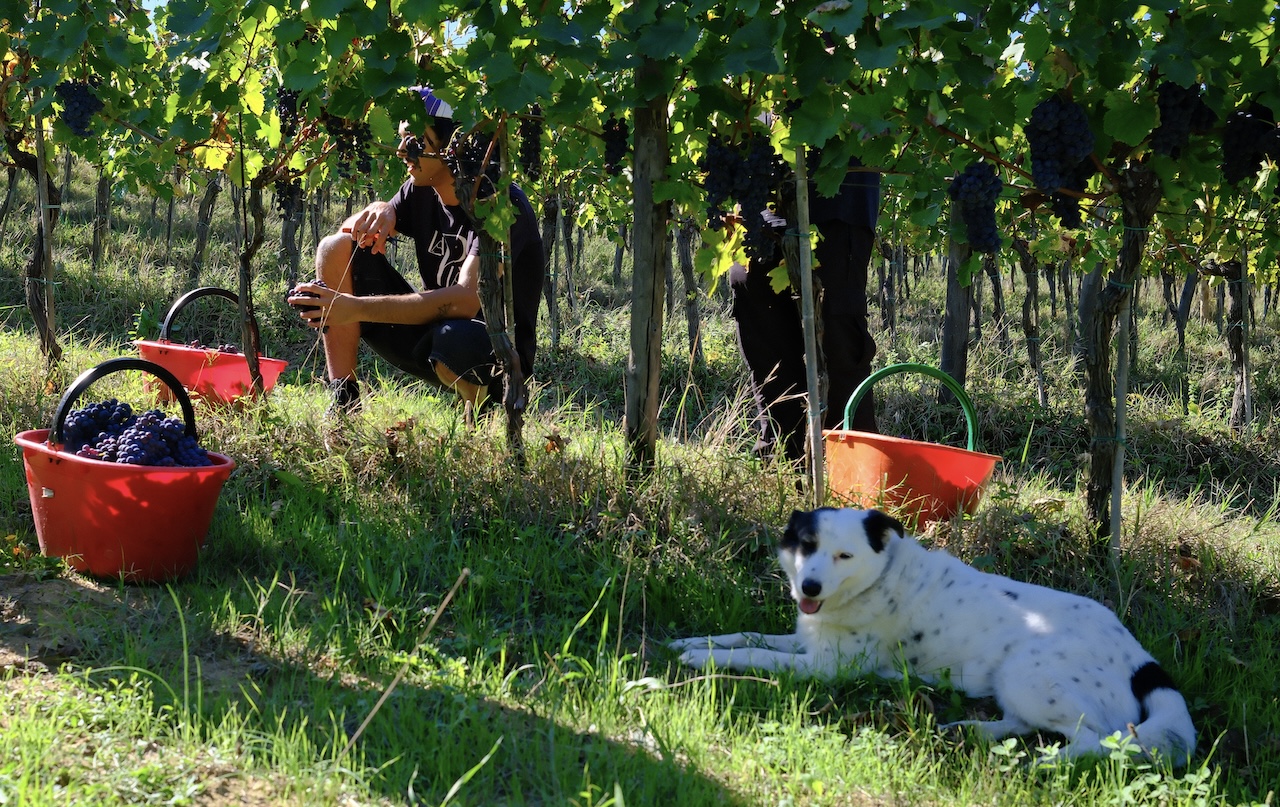
Harvest is done by hand, vine by vine.
Grapes are carefully placed in small crates to avoid crushing; only the best clusters make it to the cellar. In many cases, there’s a second selection table, where family members literally sort berries one by one.
The result?
Wines that carry the purest expression of their terroir. Lower yields mean more concentration. Minimal intervention means greater authenticity. You taste the soil, the sun, and the year itself.
In these small wineries, nothing is standardized. Some use neutral oak, others amphora or cement. The philosophy is always the same: let the wine speak for itself. And because these are real working farms, not showrooms, the experience feels alive. You might taste next to the barrels, in the kitchen, or under a pergola overlooking the vineyards.
Big vs Small: A Detailed Comparison
| Category | Big Wineries | Small Wineries |
|---|---|---|
| Harvest | Mechanical, fast, efficient | Manual, selective, respectful |
| Vineyard management | Large-scale, chemical prevention | Organic or low-intervention, vine-by-vine care |
| Guest experience | Structured tours, larger groups, fixed times | Personal connection, small groups, flexible timing |
| Atmosphere | Polished, professional, sometimes crowded | Intimate, relaxed, family-style |
| Wine character | Consistent, reliable, refined | Distinctive, expressive, unique |
| Staff | Trained employees | Owners, winemakers, families |
| Goal | Profit and brand reputation | Passion, tradition, and quality |
| Visit feel | Efficient, educational | Emotional, memorable |
A Scene from Both Worlds
In a big estate, you might find yourself standing in a line of tourists, tasting wines at a bar counter. Everything works like clockwork spotless glasses, precise pours, professional explanations.
In a small winery, you might sit at a wooden table beside the vineyard, sharing homemade bread, olive oil, and laughter. The winemaker will tell you about the year it hailed in August, or how their father planted that particular vineyard fifty years ago.
Both moments have value , but they touch different parts of your soul.
Authenticity and Sustainability
Most family-run wineries in Tuscany practice at least partial organic or sustainable farming, not because it’s trendy, but because they live among the vines. They can’t spray toxins near their children, their olive trees, or their own vegetables.
They compost, use natural manure, and plant flowers between rows to attract bees. Many also produce olive oil, honey, or vegetables on the same land.
This closeness to nature doesn’t just shape their farming , it defines their hospitality. When you visit, you feel it: the quiet respect for the land, the pride in each bottle, the joy of sharing something real.
Why Small Wineries Win Hearts
-
Personal stories: You meet the people behind the label.
-
Limited groups: Fewer than 10 guests, often private or semi-private tastings.
-
True connection: Conversations, not presentations.
-
Local food: Pairings often include homemade dishes or farm products.
-
Atmosphere: No rush, no noise, just Tuscany at its most genuine.
For travelers, especially from the U.S., this is the experience they dream of when they picture “Under the Tuscan Sun.”
When Big Can Still Be Worth Visiting
To be fair, some large estates are worth your time. Historic castles like Castello di Ama, Castello di Brolio (Ricasoli), Antinori winery or Fontodi combine art, architecture, and centuries of winemaking.
Many are pioneering research on native grapes or sustainable practices on a large scale. Their tours are often educational and beautifully organized ,perfect for those who enjoy structure, modern facilities, and grand views.
But these experiences are different, not better or worse, just another way to approach Tuscany’s wine world.
Choosing the Right Experience for You
Ask yourself what you want from your wine day:
-
Do you prefer quiet authenticity over grandeur?
-
Would you rather meet a passionate winemaker than a polished guide?
-
Do you want to taste wines that might surprise you or ones that have global recognition?
If your answer leans toward connection, storytelling, and slow rhythm, choose small boutique wineries.
If you’re curious about architecture, history, and professional tastings, include one larger estate, just balance it with a smaller stop.
That’s why our tours blend both worlds, so you can appreciate Tuscany’s diversity while staying true to its soul.
Suggested Itineraries from Florence
Chianti 2-Winery Tour, Slow & Intimate
A relaxed 5-hour escape from Florence, visiting two boutique wineries in Chianti, Tuscany, where you’ll walk the vineyards, meet the winemakers, and enjoy a homemade Tuscan lunch with wine pairing.
Chianti 3-Winery Tour, Signature Experience
Our most popular option in Chianti, Tuscany. A perfect balance between learning and leisure — includes diverse tastings, olive oil sampling, and breathtaking countryside stops.
Chianti 4-Winery Tour, Full Immersion
For wine enthusiasts who want to taste it all: explore four family estates in Chianti, Tuscany, each with its own style and story, guided by a certified sommelier.
Tips for Planning Your Wine Day
-
Best months: May, June, September, October (harvest and shoulder seasons).
-
Avoid crowds: July, August, November, December, January and February or smaller wineries.
-
No car needed: All tours include transportation from Florence in A/C minivans.
-
Dress comfortably: Closed shoes for vineyard walks.
-
Ask questions: Winemakers love sharing — that’s where the magic happens.
FAQ – Travelers Often Ask
Is Chianti better than Montepulciano?
They’re simply different. Chianti (Sangiovese based) is elegant and earthy; Montepulciano (also Sangiovese based) feels lighter and delicate. Try both that’s the beauty of Tuscany.
Can small wineries ship to the US?
Yes, most can. We help guests with shipping arrangements, safely, legally, and directly from the estate.
Are small wineries organic?
Many are, or at least practice organic and biodynamic farming on small plots.
Do I need to drive to visit Chianti?
No our guided tours from Florence make it easy, comfortable, and safe.
For the Curious Wine Traveler
If you’re mapping your next adventure, mark these names:
Greve, Panzano, Radda, Castellina, Gaiole, the classic Chianti loop.
A little further south, Montalcino (for Brunello) and Montepulciano (for Vino Nobile) are must-sees for red wine lovers.
Tip: The best light for photos is after 4 p.m., when Tuscany turns gold and the vineyards glow.
In the End, Wine Doesn’t Lie
Wine carries the fingerprint of those who made it.
So when you raise your glass in Tuscany, ask yourself:
Does this taste like a business , or like a life?
That’s the difference between a big winery and a small one.
And once you taste it, you’ll never go back.
Ready to Experience the Real Tuscany?
Discover our curated wine experiences from Florence:
Small groups, big emotions, unforgettable wines.


