
Wine Tours in Tuscany - About Angie - WhatsApp - angie.chianti@gmail.com


Ask any wine lover to name one Italian wine region, and there’s a good chance “Tuscany” comes up before anything else. Rolling hills covered in vineyards, cypress lined roads, centuries old stone estates Tuscany doesn’t just produce great wine, it looks like the place great wine should come from.
But behind the postcard views is a wine culture built on something much deeper than scenery: roughly 3,000 years of continuous winemaking history, a landscape varied enough to turn the same grape into a dozen different wines, and a region wide obsession with doing things properly, even when “properly” occasionally means breaking the rules entirely.
This guide covers all of it the essential wines to know, the regions behind them, and the practical details (vintages, prices, buying, visiting) that most wine guides skip.
A Quick Word on Chianti
Chianti deserves its own deep dive, the history of the black rooster seal, the five classification tiers, the Sangiovese grape behind it, and why no two bottles taste quite the same. We’ve covered all of that in detail in our complete guide to Chianti, so we won’t repeat it here. This guide instead focuses on everything around Chianti , the other legendary wines Tuscany produces, and how they all fit together.
Chianti deserves its own deep dive the history of the black rooster seal, the five classification tiers, the Sangiovese grape behind it, and why no two bottles taste quite the same. We’ve covered all of that in detail in our complete guide to Chianti, so we won’t repeat it here. This guide instead focuses on everything around Chianti, the other legendary wines Tuscany produces, and how they all fit together.
Understanding the Classification System (Briefly)
You’ll see three letters on almost every Tuscan label: DOCG, DOC, and IGT each indicating a different level of regulated origin and production rules, with DOCG at the top. It’s worth knowing one thing this system doesn’t tell you: it doesn’t equal quality, only compliance with a specific rulebook. That distinction is the entire reason the Super Tuscan story (below) exists, some of the most expensive, most acclaimed wines in Tuscany were, for decades, legally classified below wines costing a fraction of the price, simply because they used the “wrong” grapes.
Brunello di Montalcino: The King of Tuscan Wine
If Chianti is Tuscany’s most familiar face, Brunello di Montalcino is its most respected. Made exclusively from Sangiovese Grosso, a specific, thick skinned clone of Sangiovese uniquely suited to Montalcino’s hot, dry hillsides, Brunello is bold, structured, and built to age for decades rather than years.
By law, Brunello must age a minimum of five years before release (six for Riserva), including at least two years in oak. That aging requirement isn’t just tradition, it’s what allows the wine’s initially firm tannins to soften into the dark fruit, leather, tobacco, and dried herb complexity Brunello is famous for.
Rosso di Montalcino is worth knowing too: made from the same grape, same hillsides, but aged for only one year, it’s essentially “baby Brunello” more approachable, far more affordable, and a great way to understand the terroir without the price tag or the wait.
Top producers: Biondi Santi (the estate credited with creating Brunello in the 1880s), Poggio di Sotto, Case Basse, Salvioni, Il Marroneto.
Best vintages to look for: Montalcino has had several exceptional recent vintages 2015, 2016, and 2019 are widely considered among the strongest of the past decade, worth seeking out if you’re buying to age.

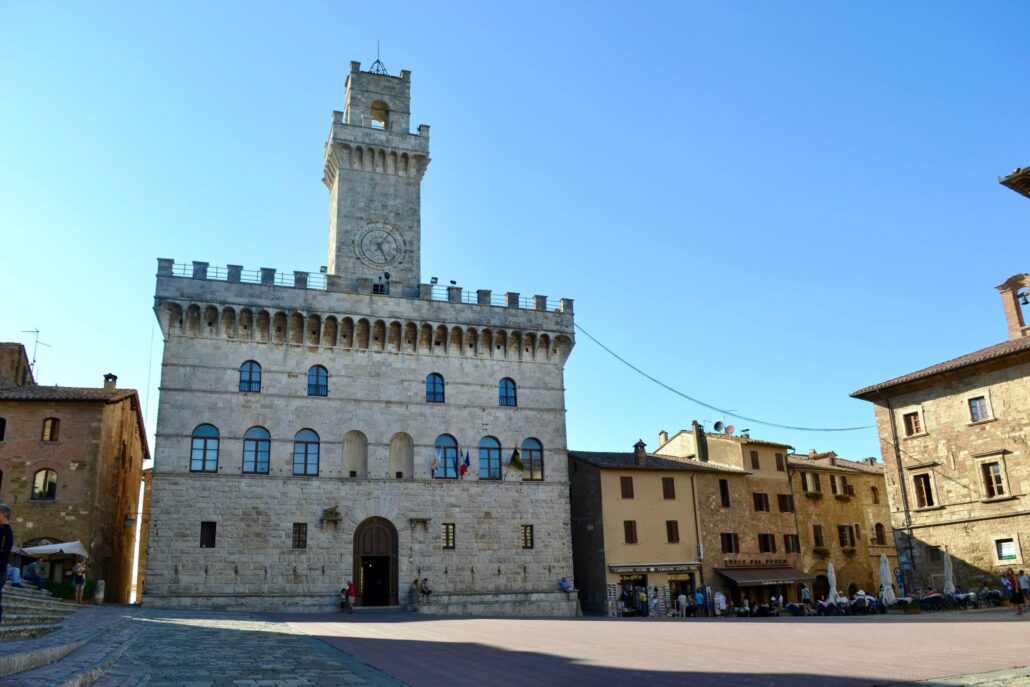
Vino Nobile di Montepulciano: The Overlooked Middle Sibling
Named for the hilltop town of Montepulciano (not to be confused with the unrelated Montepulciano grape grown in Abruzzo a common point of confusion for American shoppers), Vino Nobile is built around Prugnolo Gentile, a local Sangiovese clone distinct from both Chianti’s and Brunello’s versions of the grape.
The result sits deliberately between its two famous neighbors: more structured and age worthy than Chianti, but generally more approachable in its youth and less expensive than Brunello. It’s frequently the best value on this list serious Tuscan winemaking without the Brunello price premium.
Top producers: Avignonesi, Boscarelli, Poliziano, Contucci.
Bolgheri and the Super Tuscans: Tuscany’s Rule Breakers
No story in Tuscan wine is more dramatic than this one. In the 1970s, a handful of winemakers on the Tuscan coast frustrated by DOC rules that dictated exactly which grapes could legally be used simply ignored them. They planted Cabernet Sauvignon, Merlot, and Syrah alongside (or instead of) Sangiovese, and bottled wines with no official classification above “vino da tavola” table wine, the lowest tier in the entire Italian system.
Those “table wines” turned out to be some of the best in the world. Sassicaia, first released commercially in 1968, is now considered one of the finest wines Italy has ever produced and it single handedly created an entirely new, unofficial category: the Super Tuscan.
Today, most Super Tuscans are classified under Toscana IGT or Bolgheri DOC, but the irony remains: the “rule-breaker” wines now define what serious Tuscan winemaking looks like on the international stage.
Icons to know: Sassicaia, Tignanello, Ornellaia, Solaia, Masseto.
The good news for your wallet: the icons above command genuinely high prices (often 150–400+ Euros per bottle), but Bolgheri and the broader Toscana IGT category include excellent Super Tuscans from smaller producers at 25–50 euros, a great way to taste the style without the splurge.
Vernaccia di San Gimignano: Tuscany’s White Wine Story
Tuscany is overwhelmingly red-wine country, which makes Vernaccia di San Gimignano the region’s only white DOCG worth specifically seeking out. Grown around the medieval towers of San Gimignano since at least the 13th century (it’s even mentioned in Dante’s Divine Comedy), Vernaccia produces crisp, mineral driven wines with citrus and almond notes.
Top producers: Panizzi, Cesani, Teruzzi.

Vin Santo: The Sweet Ending
No Tuscan wine list is complete without Vin Santo (“holy wine”), a traditional dessert wine made from grapes usually Trebbiano and Malvasia dried for months on straw mats or hung from rafters before pressing, then aged for years in small barrels called caratelli.
The result is sweet, nutty, and slightly oxidative, traditionally served with cantucci (almond biscotti) for dipping one of the most authentic, least “touristy” Tuscan traditions you can experience firsthand.
Carmignano: Tuscany’s Quiet Historic DOCG
Easy to overlook, but worth knowing: Carmignano is a small DOCG zone near Florence with a genuinely unusual claim it’s been blending Sangiovese with Cabernet Sauvignon and Cabernet Franc since the 18th century, roughly two centuries before “international grapes” became a talking point anywhere else in Tuscany. If Super Tuscans are the rebellious newcomers, Carmignano is the quiet original.
This question might seem simple, but the answer is anything but! Naming the best Tuscan wines is subjective and deeply personal. While the aforementioned wines are some of the most famous, the “best” wine is the one that makes you say “wow.”
The magic of wine lies in its ability to connect to the moment. A bottle shared with friends over a rustic Tuscan meal, or a glass sipped while watching the sunset over the Chianti hills, can turn any wine into an unforgettable experience.
Additionally, the best Tuscan red wines are inextricably linked to the food they’re paired with. The right pairing can elevate both the wine and the dish, while the wrong pairing can diminish even the finest bottle.
Tuscany’s Wine Regions at a Glance
| Region | Known For | Character |
|---|---|---|
| Chianti & Chianti Classico | Sangiovese led reds | Bright, savory, food-friendly |
| Montalcino | Brunello | Bold, structured, age worthy |
| Montepulciano | Vino Nobile | Balanced, elegant, great value |
| Bolgheri | Super Tuscans | Bold, international, coastal |
| Carmignano | Historic Sangiovese Cabernet blends | Structured, understated |
| San Gimignano | Vernaccia | Crisp, mineral, Tuscany’s white |
The Terroir Factor: Why Location Changes Everything
Clay and limestone dominate the Chianti hills. Montalcino’s soils run drier and more mineral, with hotter summers. Bolgheri’s gravel rich earth and maritime breezes create an almost entirely different growing environment, just a couple hours’ drive away. This is exactly why grapes that seem similar on paper Sangiovese in Chianti versus Sangiovese Grosso in Montalcino produce wines with completely different personalities.
What Do Tuscans Actually Drink?
Despite the global fame, wine culture here stays fairly grounded:
- Daily wines: A simple glass of Chianti or local table wine with dinner nothing precious about it.
- Special occasions: Brunello or a Super Tuscan for celebrations and important meals.
- White wine moments: Vernaccia, served with seafood or lighter fare.
Food Pairings: Bringing Tuscan Wine to Life
- Brunello with aged pecorino or a true bistecca alla Fiorentina
- Vino Nobile with roasted game or hearty pasta dishes
- Super Tuscans with truffle dishes or a rich mushroom risotto
- Vernaccia with seafood or light antipasti
- Vin Santo with cantucci for dessert
The rule of thumb: match structure with intensity. A delicate dish gets overwhelmed by a big Brunello, just as a hearty steak deserves more than a light Vernaccia.
Practical Tips for Tasting and Buying in Tuscany
Tasting fees are normal and usually creditable. Most Tuscan wineries charge a tasting fee (typically €15–€40 per person depending on the number and quality of wines poured), and many will waive or credit it if you purchase bottles afterward.
Shipping wine home is easier than you’d think. Most reputable wineries and wine shops can arrange international shipping ask before you buy in bulk, since carrying more than a bottle or two home in a suitcase gets impractical fast.
Vintage matters more for Brunello than almost anything else on this list. Chianti and Vernaccia are largely meant to be enjoyed young; Brunello is the one wine here where the vintage year genuinely changes what you should expect to pay and how long to wait before opening it.
Small, boutique wineries are often the better find. Tuscany is full of family run estates too small to enter international competitions, yet producing wines that rival and sometimes outshine the famous labels. Visiting them, rather than only the big names, is usually where the most memorable tastings happen.
Tuscan Wine FAQs
What’s the difference between Chianti and Brunello? Both are built on Sangiovese, but Brunello must be 100% Sangiovese Grosso and aged significantly longer before release, giving it far more depth, structure, and aging potential than Chianti.
Is Vino Nobile the same grape as Montepulciano wine from Abruzzo? No this is one of the most common mix ups for American shoppers. Vino Nobile di Montepulciano is a Tuscan wine made from a Sangiovese clone, named after the town of Montepulciano. “Montepulciano d’Abruzzo” is a completely different grape variety grown in a different region.
Are all Super Tuscans expensive? The icons (Sassicaia, Tignanello) are, but plenty of excellent Super Tuscans from smaller Bolgheri producers sit in a very accessible 25 – 50 euro range.
Is Tuscan wine sweet or dry? Almost all of it is dry. The main exception is Vin Santo, Tuscany’s traditional dessert wine.
Where should I actually go tasting? That depends on which style you want to focus on Chianti’s rolling hills for classic Sangiovese, Montalcino for bold Brunello, or Bolgheri if Super Tuscans are the draw. A guided day trip is usually the easiest way to compare a few in one visit without the logistics of driving between rural estates yourself.
Plan Your Own Tuscan Wine Adventure
Reading about terroir and Sangiovese clones only goes so far real understanding happens with a glass in hand, standing in the vineyard where it was grown. If Chianti is your focus, start with our full Chianti guide and then book a Chianti and Super Tuscan wine tour to taste both styles in a single day.
Want to go deeper into small, boutique producers rather than the big names? A private vineyard tour from Florence lets you set the pace, ask questions directly to the winemakers, and taste the estates most tourists never find.
Ready to taste Tuscany for yourself? Browse all our Tuscan wine tours and discover why this small region became the wine capital of the world.
Table of Contents