Wine Tours in Tuscany - About Angie - WhatsApp - angie.chianti@gmail.com


If you’ve ever joined a wine tour in Tuscany, you’ve probably heard the word terroir.
It’s one of the most fascinating concepts in wine and also one of the most misunderstood.
Because terroir isn’t just a technical term. It’s the reason why a wine tastes the way it does. And more importantly, why it could never taste the same anywhere else.
Good Wine Is Made in the Vineyard
In Italy, there’s an old saying: “Il buon vino si fa in vigna” good wine is made in the vineyard.
It means that even the most skilled winemaker cannot create great wine without great grapes. And great grapes depend entirely on where they grow.
Long before the wine reaches the cellar, everything is already happening outside. In the soil. In the air. In the light.
This is terroir.
A Simple Definition of Terroir
The word terroir comes from French and can be translated as a sense of place. Its roots lie in the Latin word terra, meaning land.
But terroir goes beyond geography.
It describes how a specific environment its soil, climate, elevation, and natural conditions shapes the identity of a wine.
This is why certain wines can only exist in certain places. In Italy, the highest quality designation (DOCG) is reserved for wines that truly express their territory.
Why the Vineyard Matters More Than the Cellar
There’s a quiet truth behind every great wine: what happens in the vineyard matters far more than what happens in the winery.
Grapevines don’t thrive in comfort. In fact, they perform best in difficult conditions.
When the soil is poor, the vine is forced to struggle. Its roots dig deeper into the earth in search of water and minerals. This invisible effort is what gives wine its depth, complexity, and character.
As Antoine de Saint-Exupéry wrote in The Little Prince,
“What is essential is invisible to the eye.”
And in wine, that essential part happens underground.
The Elements That Shape Terroir
Wine experts can debate terroir endlessly, but in Tuscany, you can experience it through a few key elements each one leaving a trace in your glass.
Climate
Tuscany offers a unique balance of warm days and cool nights, ideal for grape ripening.
Sangiovese, the main grape of Chianti, benefits from this slow, even maturation. The result is wines with structure, freshness, and vibrant fruit.
But climate is more than temperature. Sunlight, wind, humidity, and seasonal changes all influence how the grapes evolve over time.
Soil
Soil is one of the most powerful expressions of terroir.
In Tuscany, you’ll find an incredible diversity—even within the Chianti region itself. From sandy soils that create elegant and aromatic wines, to clay-rich soils that produce more structured and powerful expressions.
Limestone soils, often pale and fragile, are among the most prized. Combined with clay, they form the backbone of Chianti Classico, giving wines their balance and complexity.
It may seem counterintuitive, but the most exceptional wines often come from the poorest soils.
Terrain
The shape of the land also plays a crucial role.
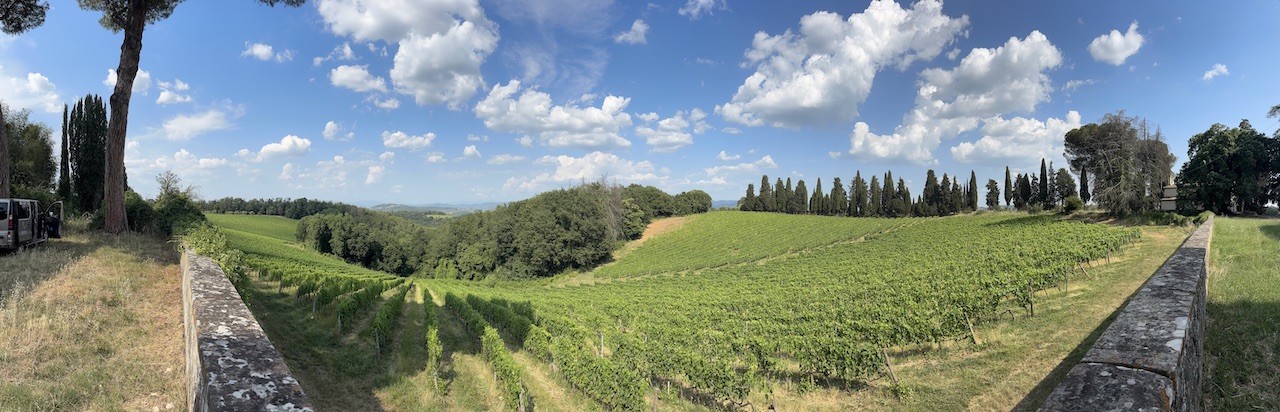
In Chianti, vineyards are typically planted on hillsides. This provides better sun exposure and natural drainage, forcing the vines to grow deeper and stronger.
Elevation influences freshness and acidity, while slope and orientation determine how much sunlight each vine receives.
Even small changes in terrain can lead to noticeable differences in the final wine.
Human Touch
Strictly speaking, terroir refers to natural elements. But in reality, human choices help reveal it.
Generations of winemakers in Tuscany have learned how to work with the land rather than against it. Pruning techniques, harvest timing, and aging methods all contribute to expressing the true character of a wine.
In small, family-run wineries, this knowledge becomes part of the identity of the wine itself.
Terroir Wines vs. Variety Wines
Modern winemaking often distinguishes between two approaches.
On one side, there are terroir driven wines wines that reflect the land they come from, shaped by local traditions and natural conditions. Chianti Classico is a perfect example.
On the other, there are varietal wines, where the focus is primarily on the grape itself rather than the place. These wines are often made to match a consistent, global style.
Both have their place. But if you want to truly understand Tuscany, you have to start with terroir.
Taste the Terroir in Chianti
Chianti is one of the best places in the world to experience terroir firsthand.
Even within short distances, wines can change dramatically. Differences in soil, altitude, and exposure create distinct personalities in every bottle.
But reading about terroir is one thing. Experiencing it is something else entirely.
Walking through the vineyards, touching the soil, and tasting wines exactly where they are produced allows you to understand these differences in a way no book ever could.
And that’s when wine becomes more than a drink.
It becomes a place, a story, a memory.
Frequently Asked Questions About Terroir and Tuscan Wine
What does terroir mean in wine?
Terroir refers to the natural environment where a wine is produced, including soil, climate, elevation, and local conditions. These elements work together to give each wine its unique character and make it impossible to replicate elsewhere.
Why is terroir important in Tuscany?
Tuscany is one of the best regions in the world to understand terroir because of its diversity. Even within a small area like Chianti, changes in soil, altitude, and exposure can produce wines with very different styles and personalities.
What grape best expresses terroir in Tuscany?
Sangiovese is the grape that most clearly reflects terroir in Tuscany. It is highly sensitive to changes in soil and climate, which is why Chianti wines can vary so much depending on where they are produced.
What is the difference between terroir wines and varietal wines?
Terroir wines reflect the place where they are made, highlighting local conditions and traditions. Varietal wines focus more on the grape itself and are often produced to achieve a consistent style, regardless of location.
Is the best way to understand terroir through a wine tour?
Yes, because terroir is not just something you read about—it’s something you experience. Visiting vineyards, seeing the soil, and tasting wines on site allows you to understand the real differences between areas.
Discover It for Yourself
The only real way to understand terroir is to experience it.
Through carefully curated wine experiences in Tuscany, you can visit small, family-run wineries and taste the differences directly where they are made. If you’re staying in Florence, a Chianti wine tour from Florence is one of the easiest and most rewarding ways to explore the region.
To see the vineyards, meet the people behind the wines, and taste the differences directly at the source.