Wine Tours in Tuscany - About Angie - +39 3333185705 - angie.chianti@gmail.com

When people talk about women in Tuscan wine, the conversation often begins with a few iconic names. Pioneers who earned international recognition and proved, decades ago, that women belonged at the heart of a deeply traditional industry. Figures such as Donatella Cinelli Colombini helped reshape Italian wine history, opening doors that had long remained closed.
But Tuscany today tells a broader, quieter story. One that rarely makes headlines, yet unfolds every day among the vines.
Beyond Famous Names: What’s Really Changing
Across Chianti and other Tuscan wine areas, a new generation of women is redefining what it means to be a winemaker. They are not widely known, not heavily promoted, and often absent from glossy wine magazines. Instead, they run small, family owned estates, work directly in the vineyards, and make hands on decisions that shape each vintage. Many of these Tuscan winemakers belong to a new generation that values competence, sustainability, and personal involvement over visibility.
This shift is subtle but profound. These women are not symbolic figures or secondary roles within family businesses. They are owners, managers, and winemakers in their own right. Many have chosen this path deliberately, returning to rural life after university or resisting more conventional careers in favor of agriculture and wine.
Educated, Grounded, and Deeply Hands On
What distinguishes this new generation is preparation. Many of these women studied agronomy or enology, bringing scientific training into wineries that once relied solely on inherited knowledge. They speak confidently about soil composition, climate patterns, vineyard exposure, and fermentation choices. Their approach blends respect for tradition with a modern understanding of sustainability and precision.
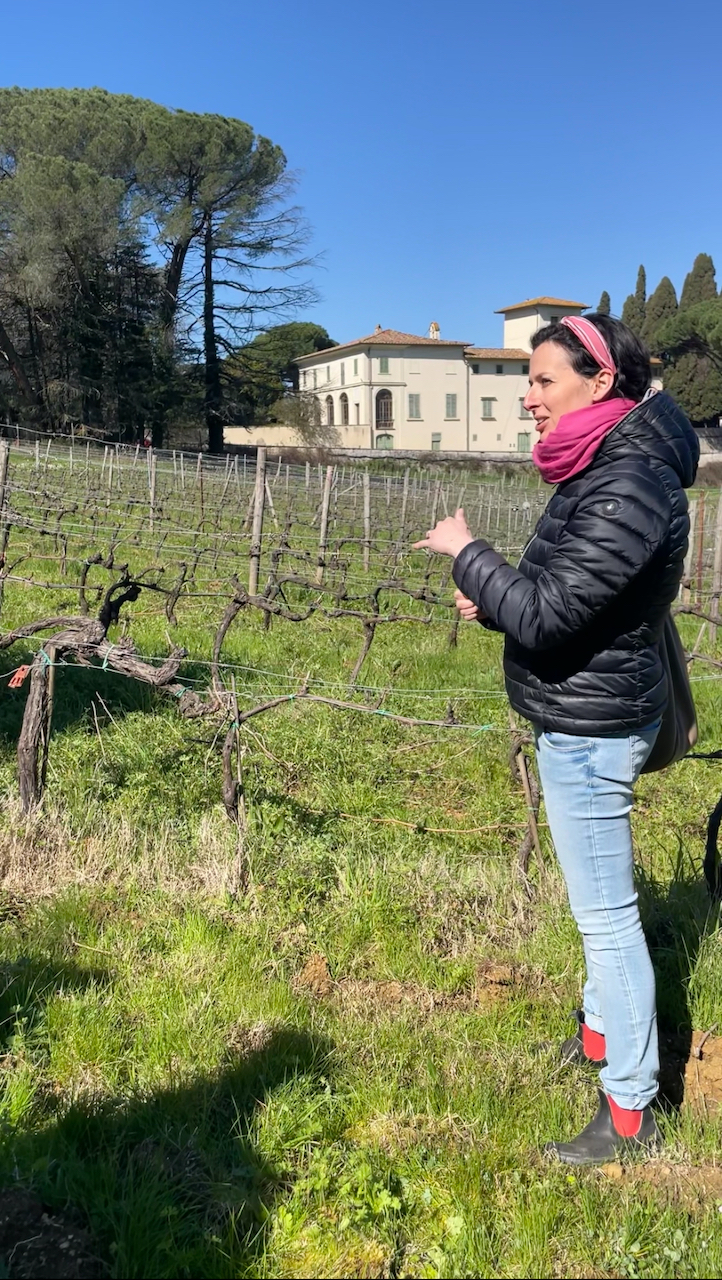
In Chianti especially, this evolution is easy to perceive. Within many small Chianti wineries, women are now leading both vineyard and cellar work, combining formal education with an intimate knowledge of the land. The classic image of wine production as a male dominated world is slowly giving way to something more balanced and thoughtful. These women work in boots and jeans, move naturally between vineyard and cellar, and lead with quiet authority rooted in competence rather than hierarchy.
Their wines often reflect this mindset. There is a clear preference for organic practices, minimal intervention, and lower-impact farming. Not as a trend, but as a coherent philosophy. Quantity matters less than identity. Expression matters more than power. Wine is treated not as a product to engineer, but as a reflection of land, season, and human choice.
The Human Side of Tuscan Wine Today
Meeting these women offers a different perspective on Tuscany. Conversations are unpolished and sincere. They speak openly about difficult vintages, climate challenges, and the realities of running a small winery. There is no rehearsed storytelling, no marketing script. Just lived experience.
This is where Tuscan wine becomes more than a tasting. It becomes a dialogue. Visitors often realize that the region is not frozen in time or bound by nostalgia. It is evolving, shaped by people who honor tradition without being constrained by it.
Those who explore Tuscany through curated wine experiences, often described simply as a wine tour Tuscany travelers remember most, find themselves face to face with this new generation, not by design, but naturally, not intentionally, not as a themed encounter, but naturally, because these women are now an integral part of the region’s most authentic wineries. Listening to them speak about their work adds a human dimension that no label or tasting note can fully convey. Seeing a young winemaker explain her daily work among the vines makes that connection even more tangible.
For many travelers, these encounters become the most memorable part of a wine journey through Tuscany.
A Quiet Future Taking Shape
Many of these women are both producers and winemakers, fully involved in every step of the process. Their wines tend to be balanced, expressive, and honest, designed not to impress instantly but to be understood over time. The experience of tasting them alongside the people who created them often leaves a lasting impression.
The future of Tuscan wine, shaped by a new generation of Tuscan winemakers, does not shout. It moves steadily and thoughtfully, shaped by educated hands, patient observation, and a deep respect for the land. More and more often, that future speaks with a woman’s voice.