Wine Tours in Tuscany - About Angie - +39 3333185705 - angie.chianti@gmail.com

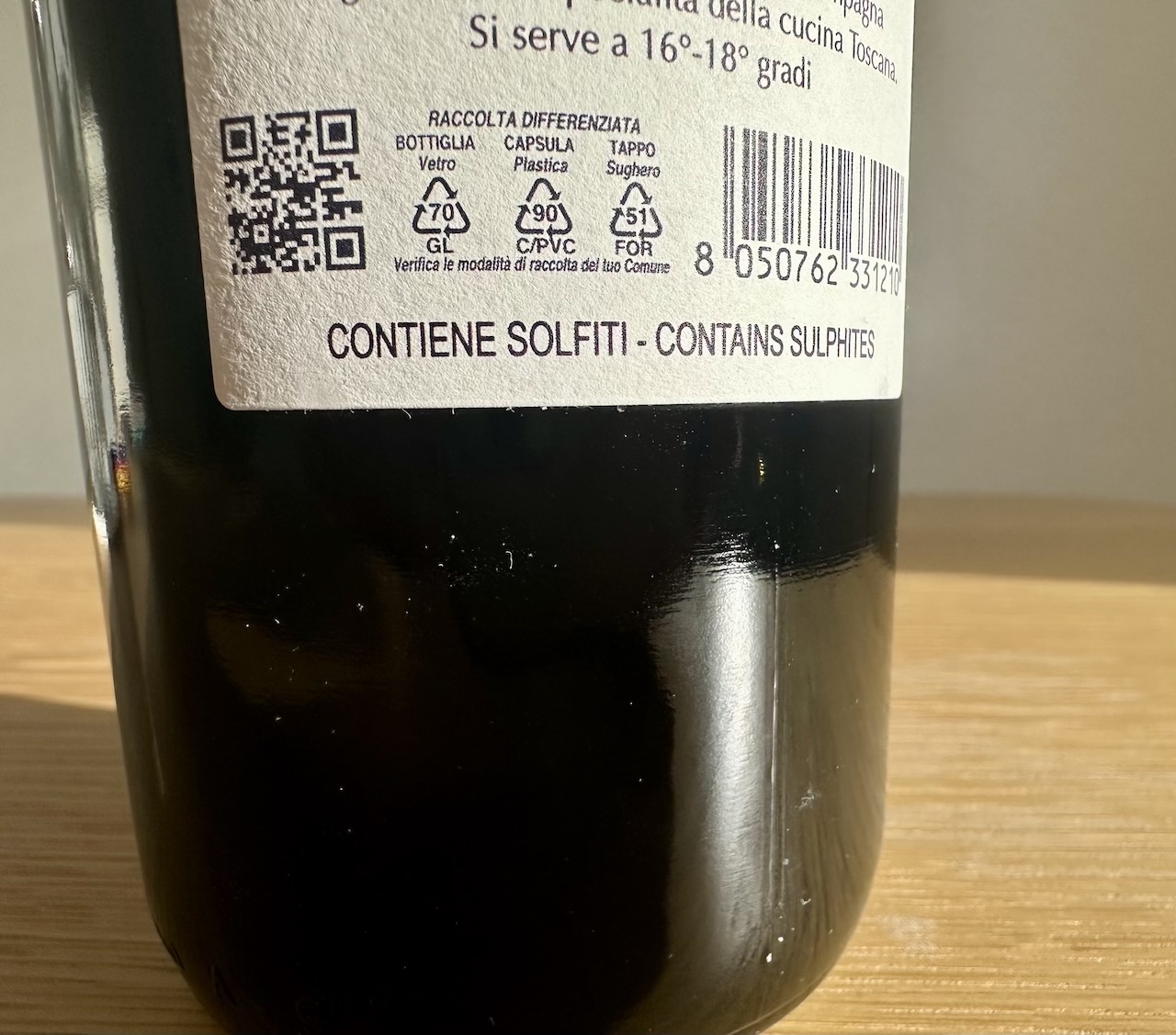
If you’ve ever woken up after a glass of wine wondering “Was it the sulfites?”, you’re not alone. Few words on a wine label trigger as much anxiety as “contains sulfites.”
They sound technical, artificial, and vaguely unhealthy. And yet, sulfites are one of the oldest and most natural tools in winemaking.
This guide is meant to slow things down and explain sulfites in a calm, narrative way. Not as a chemistry lesson. Not as marketing. And not as an anti-sulfite crusade. By the end, you’ll understand what sulfites actually are, why they exist, when they become a problem, and why wines from places like Tuscany often feel noticeably different in the glass.
Table of Contents
What sulfites really are
Sulfites are sulfur-based compounds, most commonly sulfur dioxide, abbreviated as SO₂. What often surprises people is that sulfites are not an invention of modern industry. They are created naturally during fermentation.
When yeast converts grape juice into wine, it produces small amounts of sulfur dioxide on its own. This means that every wine in the world contains sulfites, whether the winemaker wants them there or not. Even wines labeled “natural” or “no added sulfites” are not sulfite-free. They simply rely on what nature already produces.
This distinction is crucial, because it shifts the conversation away from fear and toward understanding.
Why sulfites exist in wine at all
Wine is alive. From the moment grapes are crushed, wine is exposed to oxygen, bacteria, and wild microorganisms. Left completely unprotected, wine can oxidize, lose freshness, turn cloudy, referment in the bottle, or develop unpleasant aromas.
Sulfites are used because they perform two jobs extremely well. They slow oxidation, protecting color and aroma, and they control unwanted microbial activity that can spoil wine.
When used with restraint, sulfites do not dominate a wine. They sit quietly in the background, preserving what the vineyard and fermentation have already created.
The part few people like to admit
Here is an uncomfortable truth that is rarely explained to consumers.
The more fragile or poorly made a wine is, the more sulfites it usually needs to survive.
Healthy grapes, careful harvesting, clean cellars, and balanced acidity all reduce the need for chemical intervention. When grapes are damaged, vineyards are over-farmed, or fermentations are unstable, sulfites often become a corrective tool rather than a protective one.
In many cases, sulfites are not the cause of bad wine experiences. They are a symptom of deeper issues.
Natural sulfites and added sulfites are not the same thing
All wines contain naturally occurring sulfites from fermentation. Added sulfites are introduced deliberately at specific moments to stabilize the wine.
A bottle labeled “no added sulfites” does not mean sulfites are absent. It means no additional sulfur dioxide was added beyond what yeast produced naturally.
What matters is not ideology, but quantity, timing, and balance.
Why white wines usually contain more sulfites than red wines
This is one of the most counterintuitive facts about wine.
Red wines ferment with grape skins and seeds, which release tannins and other phenolic compounds. These substances act as natural antioxidants and help protect the wine.
White wines are made without prolonged skin contact. As a result, they are more sensitive to oxygen and microbial instability. To preserve freshness and prevent oxidation, winemakers often rely more heavily on sulfites in white wines.
Ironically, people often blame red wine for headaches, even though white wines typically contain higher sulfite levels.
Why sulfite numbers on labels don’t tell the full story
Not all sulfites behave the same way in wine.
Some sulfites remain free and active, meaning they can still protect the wine. Others become bound, attaching themselves to pigments or other compounds and losing their protective power.
Two wines can contain similar total sulfite levels and behave very differently in the glass depending on how much sulfur dioxide is actually active. This is why sulfite numbers alone rarely explain how a wine feels or ages.
Acidity changes everything
The effectiveness of sulfites depends heavily on acidity. In lower-pH wines, which are more acidic, sulfur dioxide is more active and efficient. In higher pH wines, larger quantities are needed to achieve the same level of protection.
This is one reason many traditional European wines, which tend to have naturally higher acidity, can remain stable with lower total sulfite levels. Balance in the vineyard reduces the need for correction in the cellar.
Do sulfites really cause headaches
This is the question almost everyone asks, and the answer is more nuanced than most headlines suggest.
There is no strong scientific evidence linking sulfites directly to wine headaches. In fact, many everyday foods contain far higher sulfite levels than wine, including dried fruit, processed potatoes, and cured meats.
More likely causes of wine discomfort include alcohol itself, dehydration, histamines, tannins, and other naturally occurring compounds found in grapes. True sulfite sensitivity does exist, but it affects a small percentage of people, often those with asthma. Their reactions tend to involve breathing difficulties or skin symptoms rather than headaches.
Europe and the United States do not treat sulfites the same way
Many wine drinkers notice they feel different when drinking wine in Europe. This is not imagination.
European regulations impose significantly lower sulfite limits than those allowed in the United States, especially for dry wines. Organic wines are capped even further. In contrast, U.S. regulations allow much higher maximum levels to accommodate long distribution chains and shelf stability.
This regulatory gap helps explain why many travelers say they can drink wine comfortably in Europe but struggle back home.
Why Tuscany often feels different in the glass
In regions like Tuscany, wine remains closely tied to land, scale, and tradition. Many wineries are small, family-run, and deeply focused on farming rather than manipulation. Organic and low-intervention practices are widespread, and production rules are strict.
When grapes arrive at the cellar healthy and balanced, sulfites become a precise tool rather than a necessity. The wine doesn’t need to be forced into stability. It already has it.
Organic, natural, and biodynamic wines without the hype
Organic wines follow strict farming rules and allow reduced sulfite levels, not zero. Natural and biodynamic wines often go further by minimizing intervention throughout the entire process.
Some of these wines use no added sulfites at all. Others add very small amounts at bottling for safety. The common thread is not the absence of sulfur dioxide, but trust in healthy vineyards and living microbiology.
Ironically, replacing sulfites with aggressive filtration, pasteurization, or chemical substitutes can be far more invasive than using a small, thoughtful dose of SO₂.
Experience the Difference Yourself
Understanding sulfites on paper is one thing. Tasting wines made with care, restraint, and respect for the land is another.
In Tuscany, many small organic producers work in ways that naturally limit the need for sulfites. You truly feel the difference when tasting on site, surrounded by the vineyards, often during small group or private wine experiences with organic, family run wineries.
Final Thoughts on Sulfites in Wine
Sulfites are not villains. They are tools.
Used thoughtfully, they protect wine without muting its soul. Overused, they flatten character and vitality. The best wines rarely rely on excess, not because sulfites are inherently bad, but because great farming and careful winemaking make them less necessary.
Once you understand how wine is truly made, the label stops being scary. And the glass starts making a lot more sense.