Wine Tours in Tuscany - About Angie - +39 3333185705 - angie.chianti@gmail.com

You’ve Probably Heard of Chianti. But What Is It, Really?
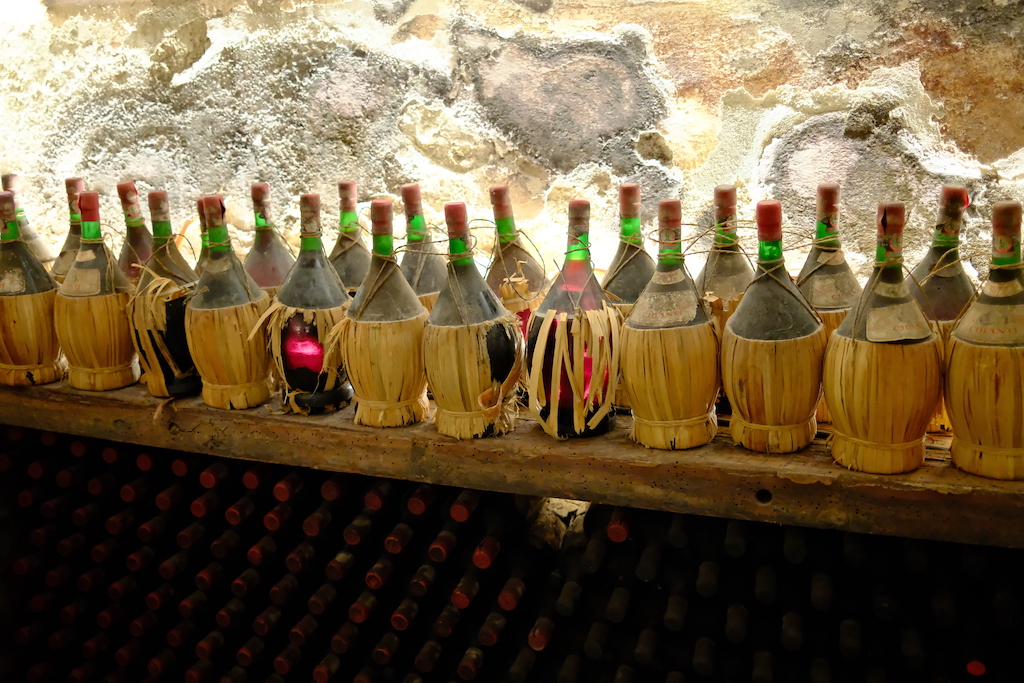
Maybe you’ve tasted it during a dinner, or noticed it on a wine list while planning your trip to Italy. Maybe you’ve seen the iconic straw covered bottle, or you simply associate it with postcard images of Tuscany rolling hills, cypress trees, sunlit vineyards, and long, relaxed lunches that seem to last forever.
But what exactly is Chianti wine?
And more importantly, why does it taste the way it does?
Because here’s the truth:
Chianti is not just a wine you study or describe with tasting notes.
It’s a wine that comes from a place, a culture, and a way of life that is still very much alive today.
For those of us who grew up in Tuscany, Chianti was never something reserved for special occasions. It was part of everyday life something present at the table, familiar rather than formal. You didn’t need to fully understand it to be around it. It was simply there, naturally woven into daily moments.
And that’s exactly what makes it different.
Before you even start talking about grapes, classifications, or aging, Chianti is already telling you a story one that begins in the land and continues through generations of people who have worked it.
What Is Chianti Wine? (Simple Explanation)
Chianti is a red wine produced in Tuscany, in central Italy, and it is made primarily from the Sangiovese grape, which forms the foundation of its identity.
To be officially labeled as Chianti, the wine must follow strict production regulations. These rules define where the wine can be produced, which grape varieties can be used, and how the wine must be made and aged. The goal is to preserve consistency, authenticity, and a clear connection to the region.
In the glass, Chianti is typically a dry red wine known for its bright acidity and balance. It often shows notes of red cherry, subtle herbs, and earthy nuances, with variations depending on the specific area and winemaking approach.
But this technical definition only tells part of the story.
To truly understand Chianti, you have to see it not just as a product, but as something deeply connected to the place it comes from.
More Than a Wine: The Identity of Tuscany
Chianti is not just something you taste. It is something that has been part of daily life in Tuscany for generations.
Long before it became known around the world, it was simply what people drank at the table, something naturally connected to food, family, and the rhythm of the seasons.
To understand Chianti today, it helps to look at where it comes from — not only as a region, but as a way of living that has shaped its character over time.
Chianti Was Once More Food Than Wine
Today, Chianti is often seen as something to taste, analyze, and enjoy slowly.
But historically, it had a very different role.
For generations of farmers in Tuscany, Chianti was not considered a “special occasion” wine. It was part of everyday sustenance something as essential as bread.
Many farmers would carry a small flask of wine with them into the fields, alongside a piece of bread. That simple combination was often their lunch, something that could sustain them through long days of physical work.
In that context, Chianti was not about aromas or structure.
It was about energy, nourishment, and practicality.
Of course, the Chianti of the past was quite different from what we know today. It was often lighter, less structured, and made for immediate consumption rather than aging or refinement.
Over time, as winemaking evolved and regulations became more defined, the identity of Chianti also changed. A key moment came in 1984, when Chianti received the DOCG classification, establishing stricter standards and marking a shift toward higher quality and greater recognition.
Understanding this evolution helps put Chianti into perspective.
What we taste today is not just a refined wine, but the result of a long journey from something deeply rooted in daily life to one of the most recognized expressions of Italian winemaking.
A Personal Note: Growing Up Around Wine
Before Chianti was something to explain, it was something we lived.
My grandfather had a small vineyard just outside the walls of a medieval village in the Tuscan countryside. It wasn’t a big production, just a few rows of vines, but for me it was where everything started. I still remember being around five years old, helping during harvest in the only way I could picking grapes slowly, getting distracted, and probably eating more than I was collecting.
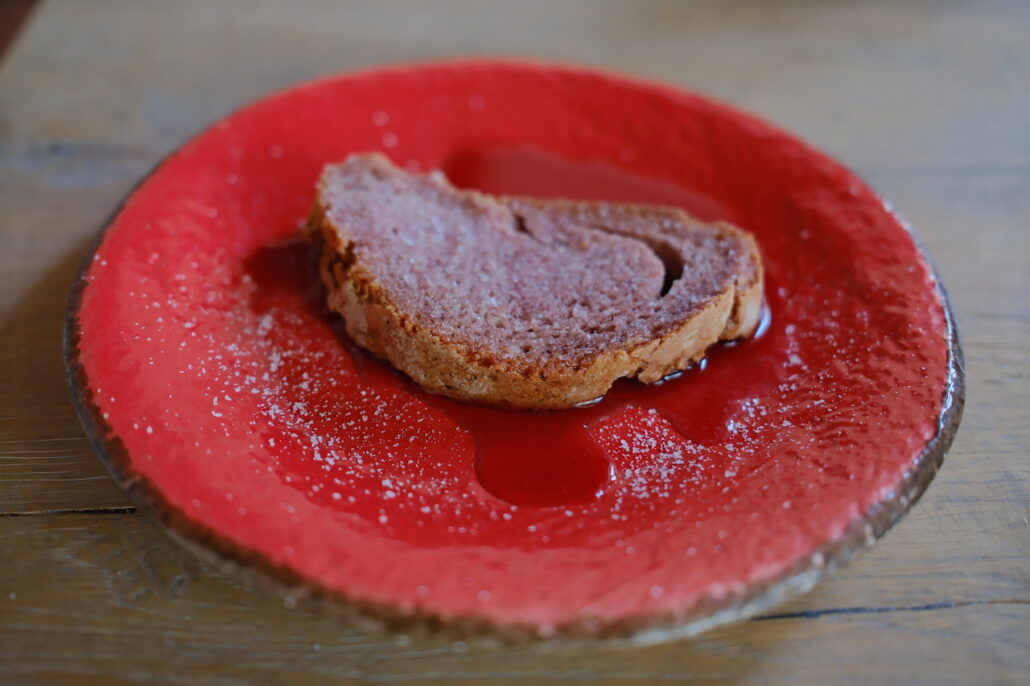
And like many children growing up in Tuscany, wine was already part of everyday life in small, simple ways. In the afternoon, a typical snack was a piece of bread lightly soaked in wine with a bit of sugar on top something that might sound unusual today, but back then was completely normal.
Later on, many of my harvest memories are tied to the vineyard of one of my closest friends. Every September, friends and family would come together to help with the vendemmia. Those days, especially between my teenage years and my early twenties, are still some of the most joyful I can remember. We worked, of course, but there was always laughter, music, and that sense of shared effort that made everything feel lighter.
I have to admit, I was never the fastest in the vineyard.
But the real highlight of the day came later.
Lunch was always prepared by the mothers and grandmothers, and it was something special. A long table set under a pergola, in the shade, with twenty people sitting together. Simple, homemade food toasted bread with olive oil, vegetables from the garden, fresh pasta, cakes and, of course, plenty of wine and a bit of vinsanto at the end.
Going back to work after that… was never easy.
But those moments, more than anything else, are what taught me what wine really means here.
It’s not just about what’s in the glass.
It’s about the people, the rhythm of the seasons, and the feeling of being part of something shared.
The Grape Behind Chianti: Sangiovese
At the heart of every Chianti is one grape: Sangiovese.
Its name comes from the Latin Sanguis Jovis, meaning “the blood of Jupiter,” reflecting its long history in Italian wine culture.
Sangiovese is the most widely planted grape in Italy, but it finds its most expressive form in Tuscany. Here, it benefits from a climate that allows it to develop both freshness and structure, thanks to warm days and cooler nights.
What makes this grape particularly interesting is its sensitivity. It responds directly to its environment from soil and elevation to sunlight and vineyard management and expresses those differences clearly in the glass.
This is why Sangiovese is capable of producing wines with very different personalities, even within the same region.
Why Chianti Wines Taste So Different
One of the most fascinating aspects of Chianti is its incredible diversity.
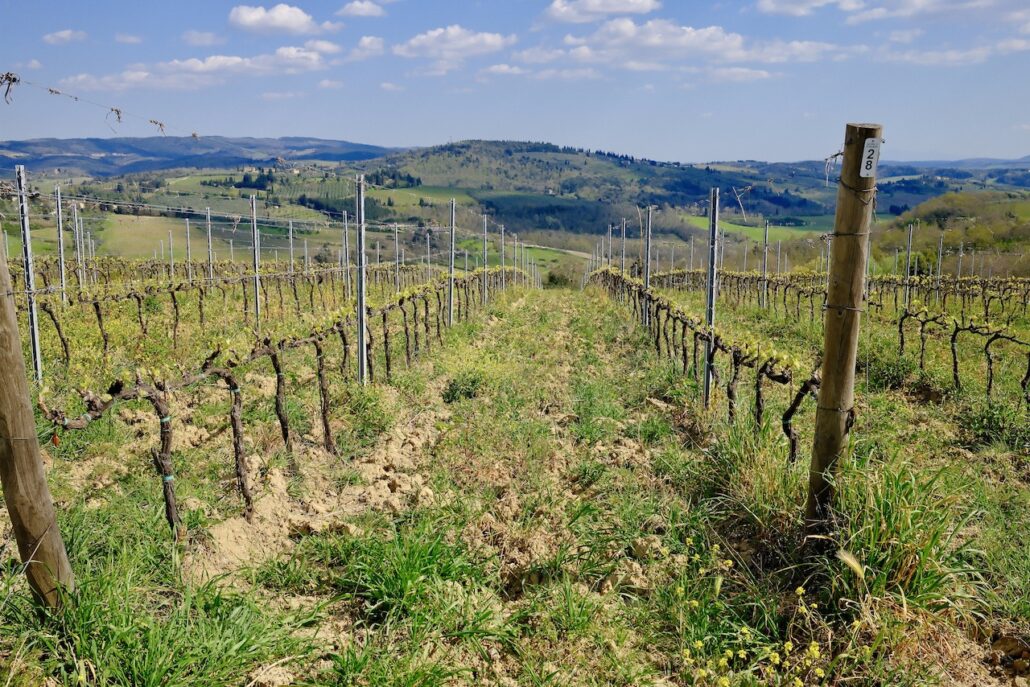
Even within very short distances, wines can change dramatically, sometimes in ways that surprise even experienced wine lovers. This is not by chance, but the result of a combination of factors such as soil composition, elevation, sun exposure, and microclimate all elements that together form what we call terroir.
In this part of Tuscany, the landscape is far from uniform. Vineyards stretch across rolling hills that shift constantly in altitude and orientation, creating subtle but important differences from one area to the next. Some soils are rocky and well draining, others richer and more compact. Some vineyards receive intense sunlight throughout the day, while others benefit from cooler conditions and slower ripening.
All of this has a direct impact on the wine.
This is why some Chianti wines come across as lighter, fresher, and more floral, with vibrant acidity and delicate aromas, while others feel deeper, more structured, and complex, with greater intensity and aging potential.
You can taste this difference quite clearly when comparing wines from different wineries, even if they are only a few kilometers apart. It’s one of those moments where theory becomes something tangible in the glass.
This natural variation is also the reason why Chianti is divided into several subzones, including the well known Chianti Classico, each with its own identity, style, and expression of the territory.
Is Chianti a Blend?
Yes and that is an essential part of its character.
While Sangiovese always remains the dominant grape, Chianti is often the result of a carefully balanced blend.
Traditionally, local grape varieties such as Canaiolo were used to soften the structure of Sangiovese, while grapes like Colorino were added to enhance color and depth. These choices were based on generations of experience and a deep understanding of how different grapes interact.
In recent years, some wineries have also started to reintroduce ancient native varieties that had almost disappeared. One example is Foglia Tonda, a traditional Tuscan grape that is now being blended again with Sangiovese in small percentages. It adds color, structure, and a slightly different aromatic profile, bringing back a piece of the region’s winemaking history.
Today, alongside these traditional approaches, some producers may also include small amounts of international varieties like Cabernet Sauvignon or Merlot to add structure or roundness.
Despite these variations, the objective remains consistent: to create a balanced wine that reflects the identity of the region without overpowering it.
Understanding DOCG and Quality Levels
If you’ve seen labels like DOC or DOCG, you might wonder what they actually mean and whether they really make a difference when choosing a wine.
In Italy, these are official quality designations that regulate how wines are produced, ensuring that what’s in the bottle truly reflects a specific place and a defined set of standards.
DOCG, which stands for Denominazione di Origine Controllata e Garantita, is the highest level in this system. It represents wines that follow the most rigorous production rules, covering everything from the grape varieties that can be used, to maximum yields in the vineyard, to minimum aging requirements before the wine is released.
In the case of Chianti, and especially Chianti Classico DOCG, these regulations are particularly strict and are designed to preserve the identity and authenticity of the wine. This means that when you see DOCG on a label, you’re not just looking at a classification you’re looking at a guarantee that the wine has been produced according to a well defined tradition and within a specific geographic area.
That said, while these designations are important and provide a useful framework, they are only part of the story.
Spending time in wineries and talking directly with producers, you quickly realize that behind every label there are still individual choices, philosophies, and approaches that go beyond regulations. Two wines with the same DOCG label can still feel very different, depending on who made them and how they interpret the land they work with.
In other words, DOCG tells you where the wine comes from and how it was made but the real personality of the wine still comes from the people behind it.
The Real Character of Chianti
Chianti has a unique ability to transport you.
Its aromas red cherry, dried herbs, subtle earthy notes often seem to mirror the Tuscan landscape itself: warm golden light, olive groves stretching across the hills, and long, unhurried meals shared outdoors.
But what makes Chianti truly distinctive goes beyond its aromas.
There is a natural balance in this wine between freshness and structure, simplicity and depth that makes it both easy to enjoy and surprisingly complex. It’s a wine that feels comfortable and familiar, yet never flat or predictable.
This is not something that happens by chance.
t comes from a balance of natural conditions and human decisions, shaped over time. From the soils that give structure, to the climate that shapes each vintage, to the countless small decisions made in the vineyard and the cellar.
That’s why Chianti is not just recognizable.
It’s memorable.
Why the Best Way to Understand Chianti Is to Experience It
Reading about Chianti is one thing. Experiencing it is something completely different.
Understanding how a wine changes from one hillside to another, or why two wineries just a few kilometers apart produce such different styles, is much easier when you see it firsthand and taste it in context.
You begin to notice details that are impossible to fully grasp on paper how the landscape shifts, how the vineyards are managed, how each producer interprets the same grape in their own way.
This is why many travelers choose curated wine experiences in Tuscany, especially those focused on small, family run wineries where the connection to the land is still very strong.
For those based in Florence, a Chianti wine tour from Florence is one of the easiest and most enjoyable ways to explore the region without the stress of planning.
Some experiences are designed to be more immersive, with visits to three different wineries that allow you to compare styles and deepen your understanding of the territory. Others take a slower, more relaxed approach, focusing on two carefully selected wineries with more time to enjoy each stop.
Both offer something valuable.
The difference is simply how you want to experience Chianti.
Chianti, Sangiovese, and the Bigger Picture
So what’s the difference between Chianti and Sangiovese?
Sangiovese is the grape the foundation, the raw material from which everything begins.
Chianti, on the other hand, is the expression. It is what happens when that grape interacts with a very specific place, shaped by the soils, the climate, and the traditions of Tuscany.
The same Sangiovese grown in a different region would never produce the same result. It’s the combination of natural conditions and human choices that gives Chianti its identity.
This is why the distinction matters.
One is the variety.
The other is the outcome.
Together, they create something that goes beyond a simple definition of wine.
Not just a product, but an expression of a territory something that reflects Tuscany not only in flavor, but in character, rhythm, and way of life.