Wine Tours in Tuscany - About Angie - WhatsApp - angie.chianti@gmail.com

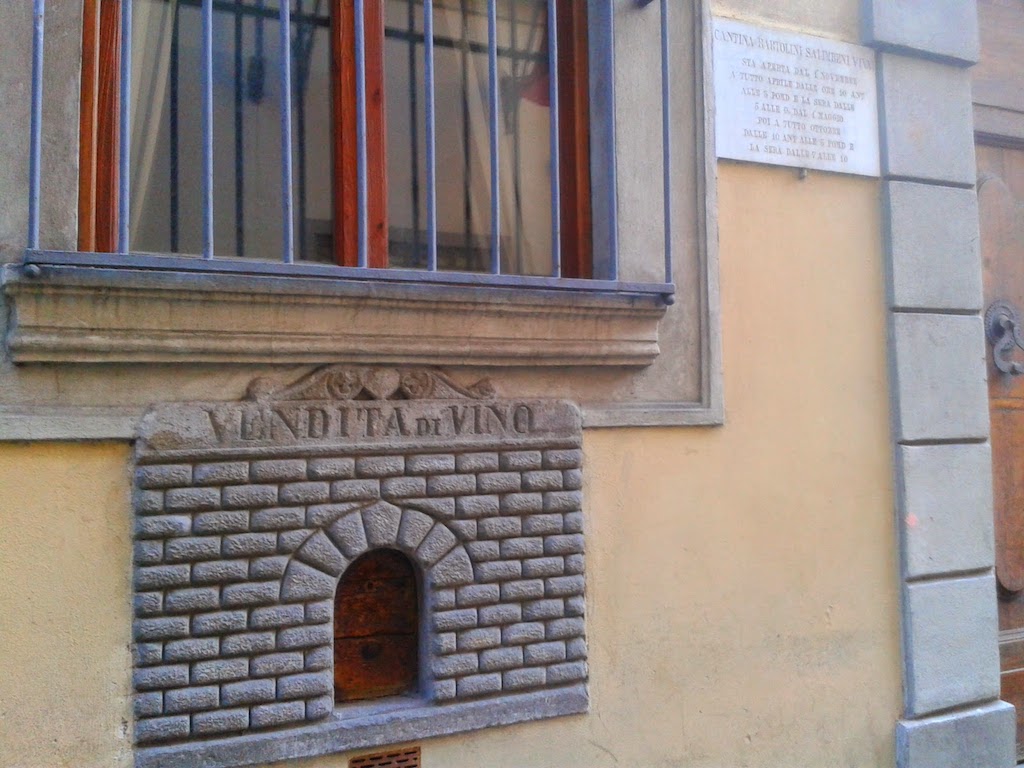
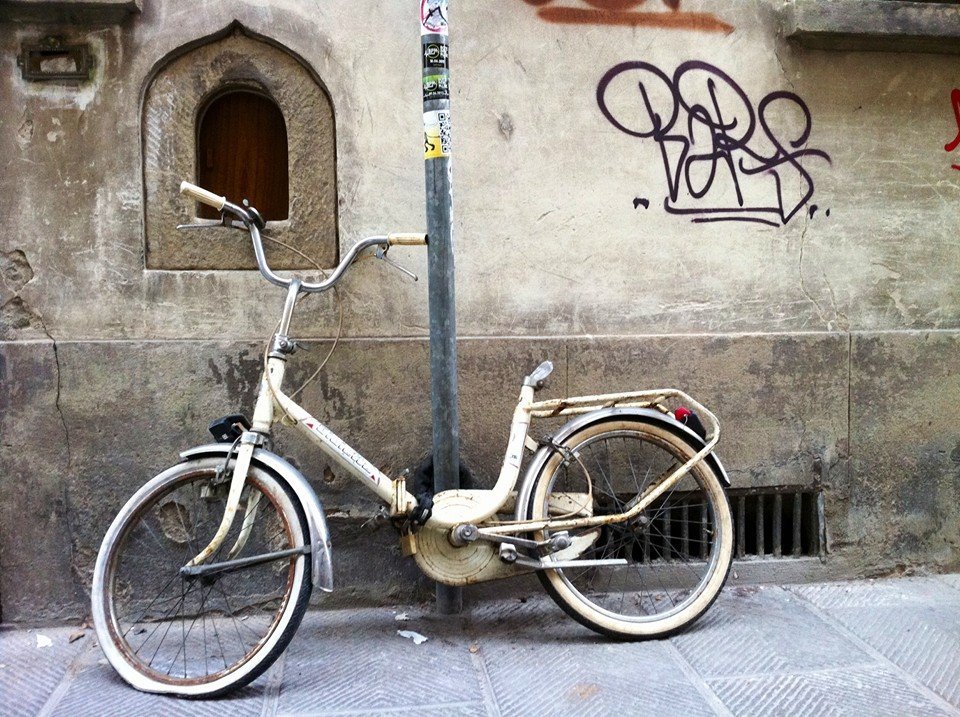
Walking through the historic center of Florence, it’s easy to miss them at first. Small arched opening set into the walls of old palaces, often no larger than a hand, quietly blending into centuries-old stone. But once you notice one, you begin to see them everywhere.
These are the buchette del vino, Florence’s wine windows, and they open a small door onto a much larger story: the story of how wine moved, for centuries, from the hills just outside the city directly into Florentine daily life. That story still has a name today. It’s called Chianti Colli Fiorentini.
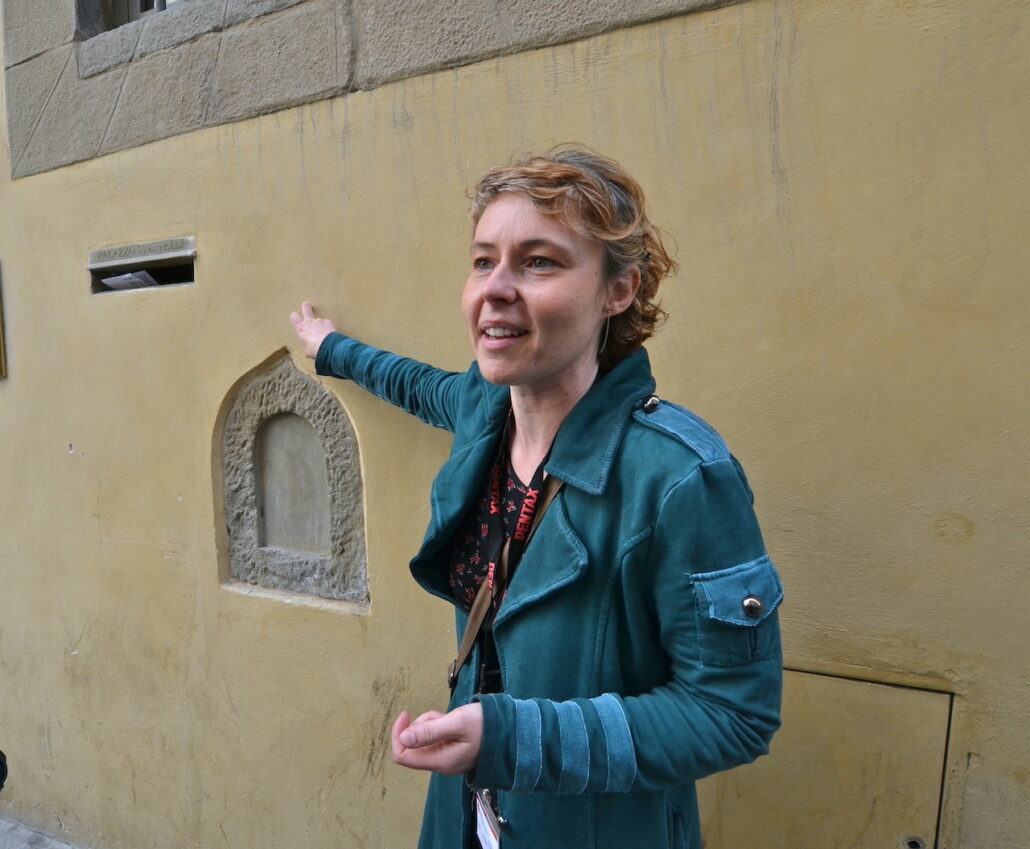
I still remember the first time I really noticed the wine windows. About twenty years ago, a friend came to visit with her ten year old son, and one of my first guides, Olivia, who used to lead both wine tours and Florence tours, showed us these small hidden openings around the city, including one inside a beautiful museum in Palazzo Martelli.
What are the Wine Windows of Florence?
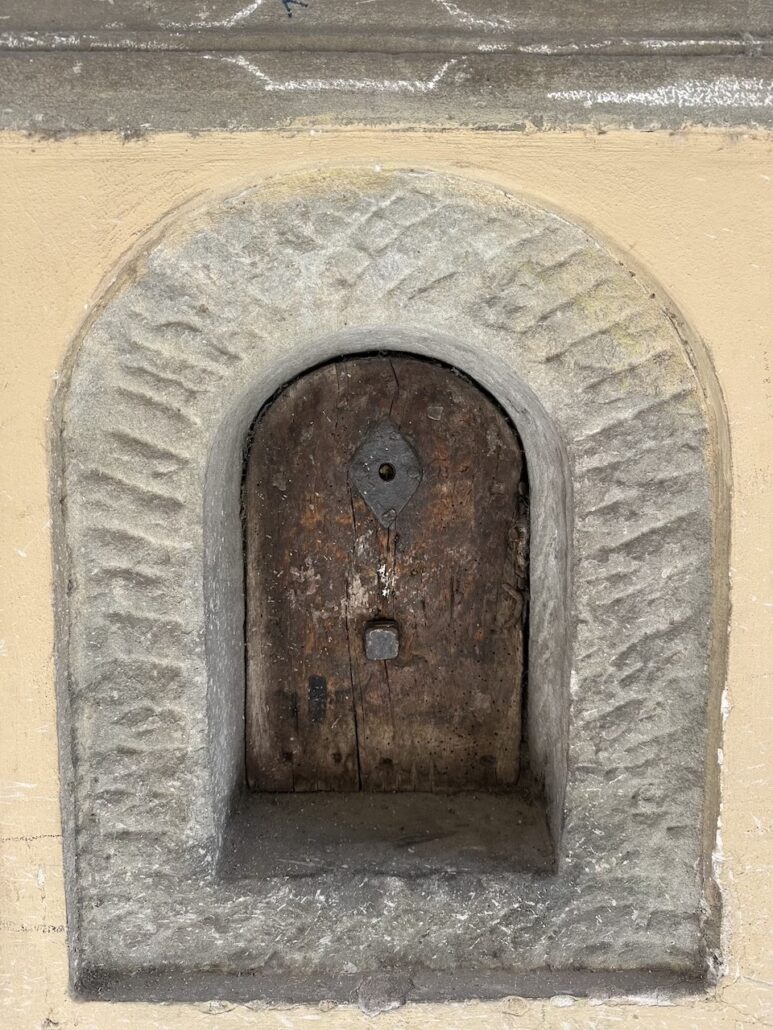
Wine windows are small hatches carved directly into the ground floor of Florentine palaces. They were used by noble families to sell wine from their own estates, directly to the people walking the streets below. A hand would knock, a coin would pass, a fiasco would appear through the opening.
Most of the surviving wine windows date from the 16th and 17th centuries. They became especially important during the plague of 1630, when direct contact between buyer and seller was dangerous: the window allowed wine (and often bread or oil) to change hands without people having to meet.
Today there are more than 150 of them still visible across the historic center of Florence, many recently restored thanks to a dedicated local association.
When I walk through Florence, I always find myself stopping at a few wine windows that most people would probably never notice on their own. I’ve always been drawn to the ones that still have their original wooden doors, the kind that used to be closed and opened with a large iron key, because they make it easier to imagine how everything once worked.
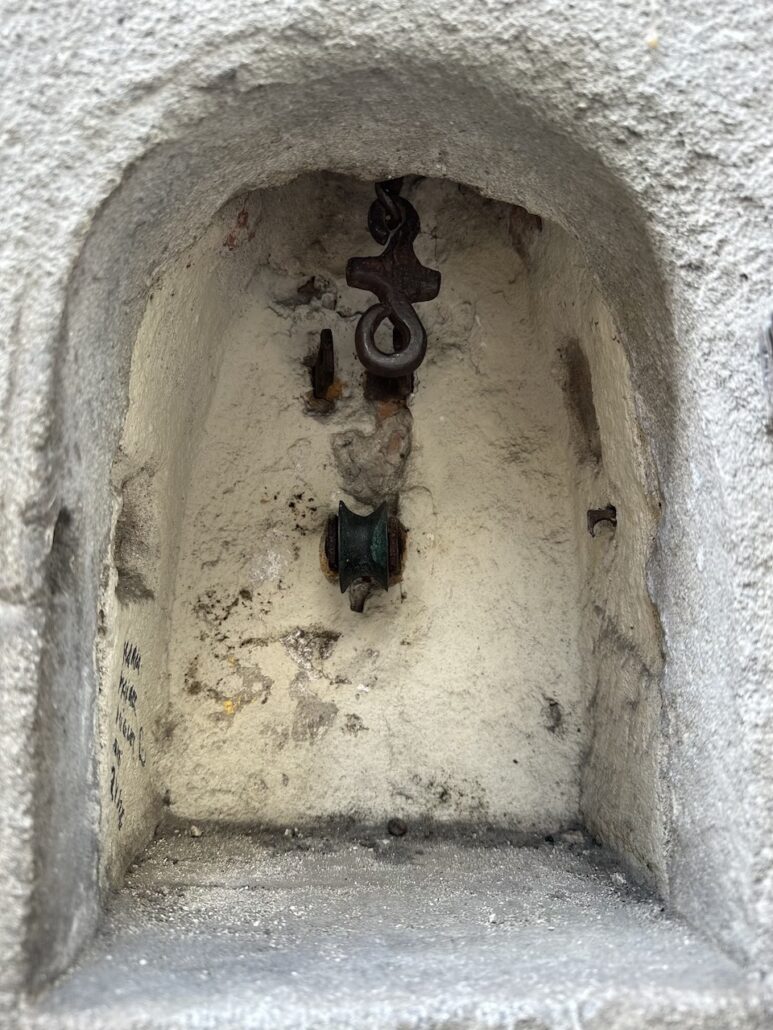
One of my favorites is on Via dei Pandolfini, where the door is gone, but you you can still see the small pulley that was once used to lift wine up from inside, people would attach an empty flask with a few coins, it would be pulled up, filled, and then lowered back down through the window, a tiny detail, but one that immediately brings the whole system to life.
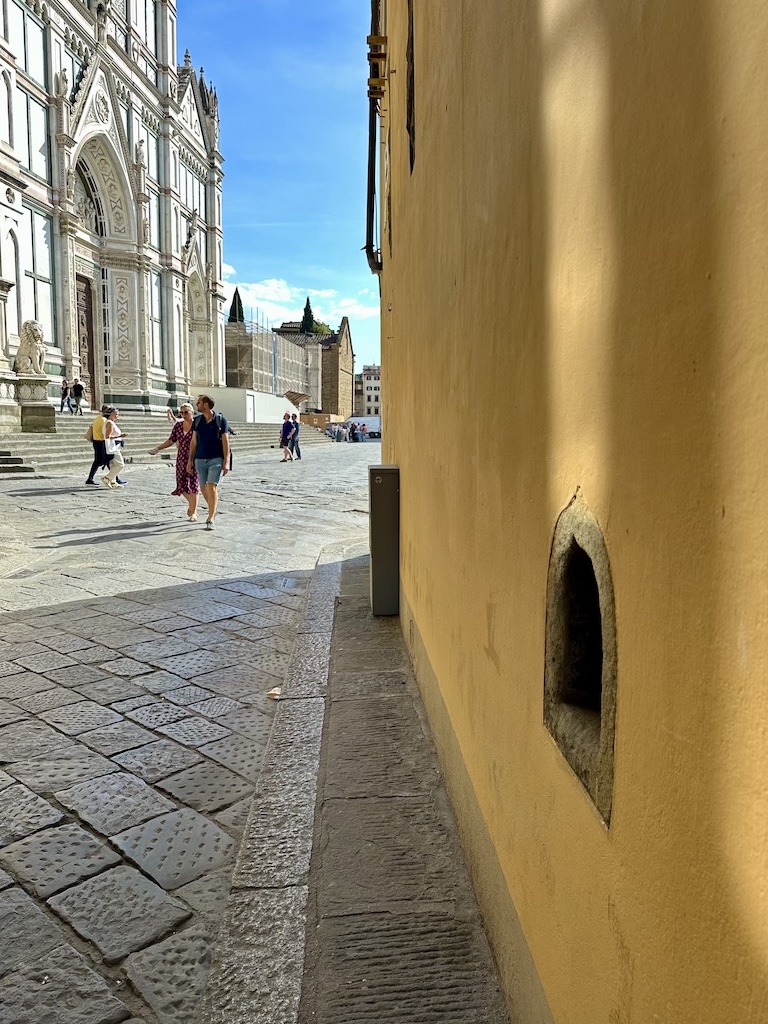
Not far from there, tucked into the wall of a palazzo near Piazza Santa Croce, there’s another wine window that opens onto a beautiful, almost unexpected view of the church and the square. You turn the corner and suddenly Santa Croce appears in front of you, while the small opening remains quietly set into the wall beside it.
It’s one of those places where the contrast makes the moment, something so simple, yet so deeply connected to the history around it.
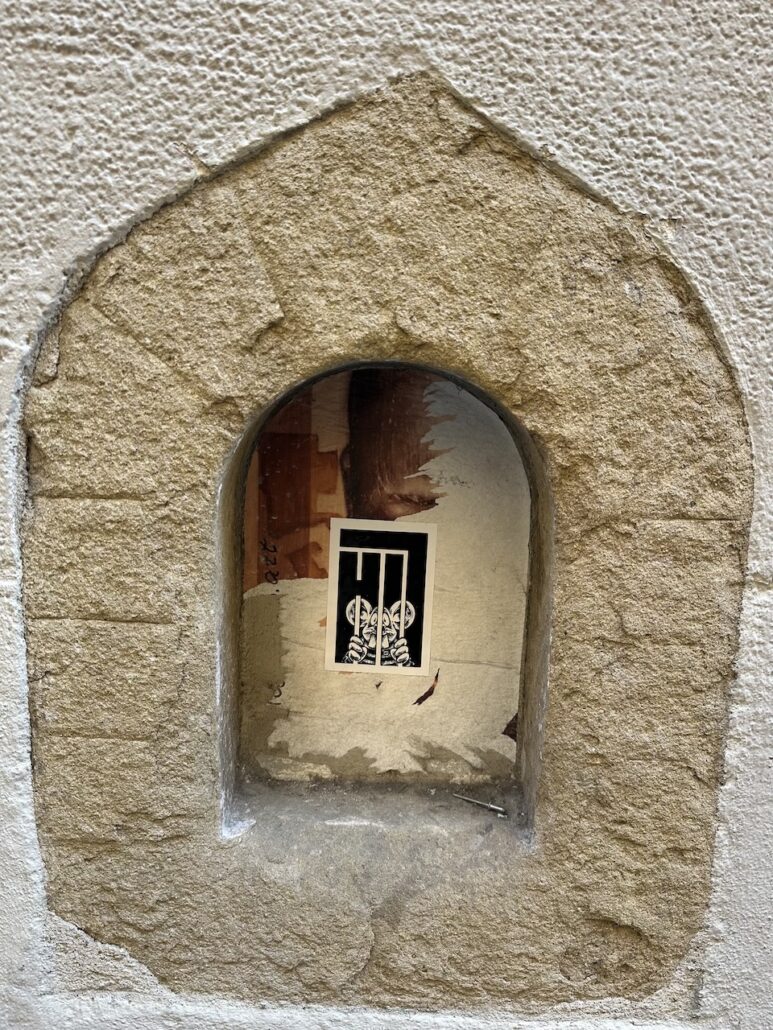
And then there are the more unexpected ones, like a small window tucked away on Via Torta, where someone has playfully added a tiny “prison” with a little mouse inside. It’s a modern, slightly ironic touch, but in a way it shows how these wine windows are still part of the city’s life today.
From the Hills to the City: How Wine Reached Florence
Long before modern distribution, wine moved slowly. It travelled in large wooden barrels on carts pulled by oxen, or in straw-covered fiaschi, those round, narrow necked flasks that became a visual symbol of Tuscany itself. The journey from a country estate to the gates of Florence could take a full day along dusty roads.
Many of the noble Florentine families, the same names you still read on street corners and chapel walls owned estates in the nearby hills. Those properties weren’t distant investments: they were extensions of the city, where the family’s olive trees, vineyards and farmland produced the food and wine that would be consumed, quite literally, a few hours later in town.
And so the wine arrived. It came through the city gates, made its way into the cellars of the familypalace, and from there it was sold glass by glass, fiasco by fiasco, through the wine window on the street.
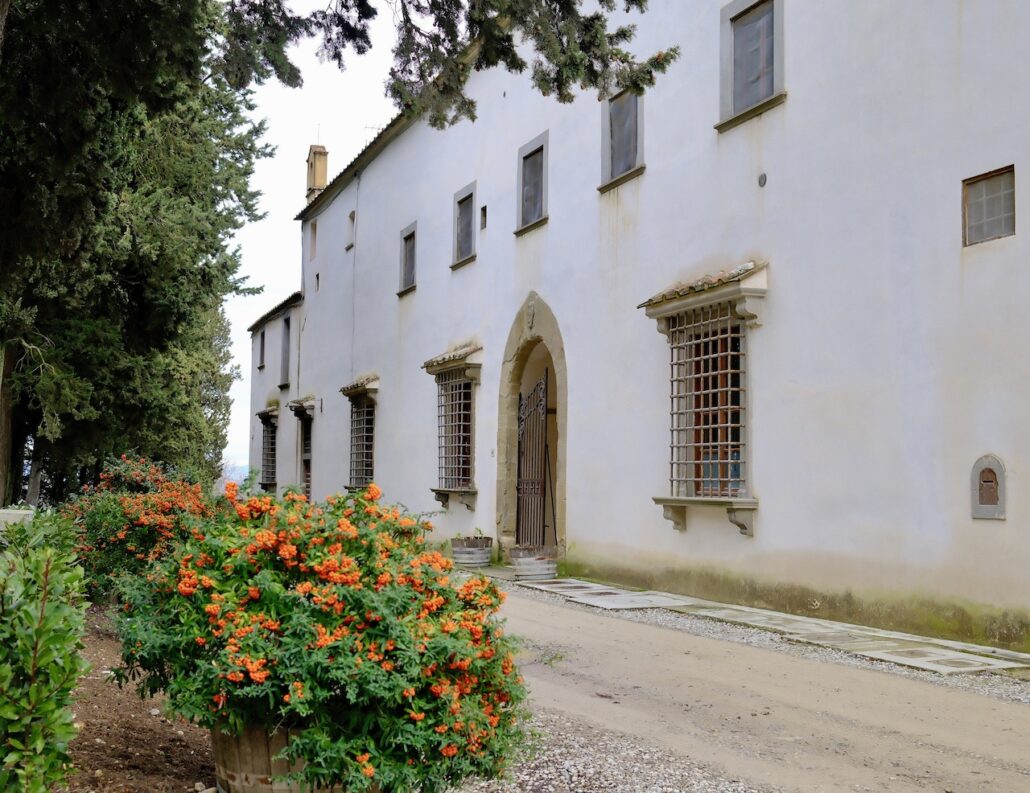
What many people don’t realize is that wine windows were not only a city feature. The same idea existed in the countryside, especially in historic estates connected to Florence, where wine was produced and sold directly from the source. At one of the wineries we visit during our chianti wine tours , a private 15th-century villa in the Chianti Colli Fiorentini area, Villa il Paganello, you can still see one of these original wine windows, quietly preserved over time. It’s a small detail, but it makes the whole system feel real, showing how the connection between city and countryside wasn’t just cultural it was practical, lived, and part of everyday life.
What Is Chianti Colli Fiorentini?
Chianti Colli Fiorentini is one of the historic subzones of the broader Chianti denomination. It surrounds Florence on almost every side, stretching across the hills that border the Chianti Classico area to the south.
The Territory
The appellation covers several municipalities south, east and west of Florence, among them Tavarnelle, Barberino Val d’Elsa, Impruneta, Bagno a Ripoli. Geographically, it acts as a natural bridge between the city and the deeper Chianti countryside. In practice, this means you can leave Florence after breakfast and be standing in a Colli Fiorentini vineyard in under half an hour.
The Grapes
Like all Chianti wines, Colli Fiorentini is based primarily on Sangiovese , the grape that defines Tuscan red wine. What makes this denomination distinctive is its flexibility in blending: alongside traditional local varieties like Canaiolo and Colorino, small amounts of white grapes such as Malvasia or Trebbiano have historically been allowed. It’s a trace of older Tuscan farming, when vineyards were mixed rather than specialized, and every field produced a little of everything.
The Style
Compared to Chianti Classico, Colli Fiorentini wines tend to be lighter in body, fresher in character, and ready to drink younger. They’re not built for decades of cellaring, they’re built for the table. A bottle opened with friends, a Tuscan dinner that stretches into the evening, a pour that goes with bread and tomatoes as easily as with bistecca. This is the wine in its original role: daily, convivial, close to the food.
A Wine Closely Connected to Florence
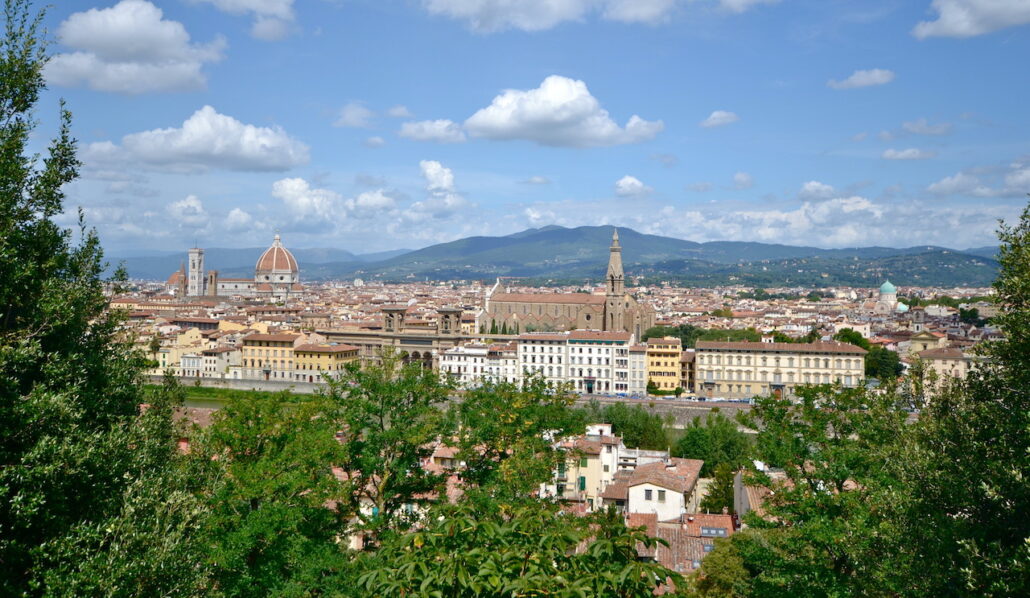
What makes Chianti Colli Fiorentini particularly interesting is this direct, living connection to the city. Unlike many other Tuscan wine areas that feel distant and self-contained, this is a wine that has always been close to Florence , shaped not just by the land, but by the people who lived within its walls and by the rhythms of their daily life. For centuries there was no real separation between countryside and city: the vineyards were just beyond the gates, and the wine they produced became part of everyday consumption rather than something reserved for special occasions.
That continuity is still visible today, if you know where to look. The wine windows scattered across the historic center are quiet witnesses of a time when wine wasn’t packaged as an experience, it was lived as a necessity, moving directly from producer to drinker, from the hills into the heart of thecity.
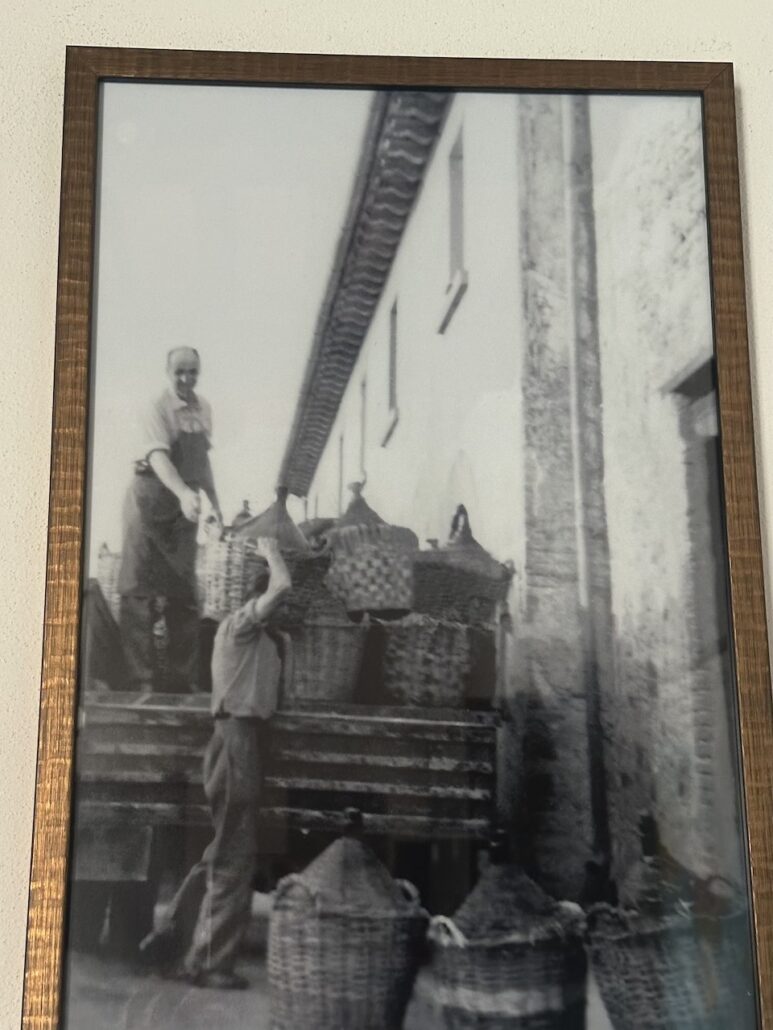
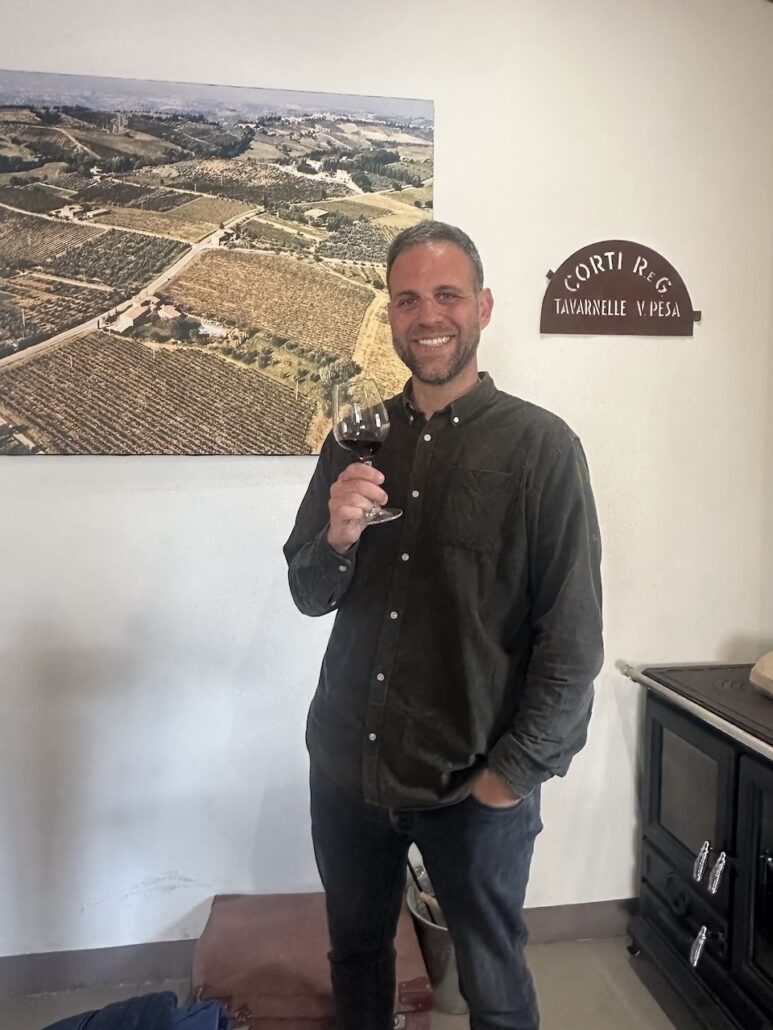
There’s a Chianti winery from the Colli Fiorentini area that we often go to during our wine tours from Florence, it is a small family run winery called Poggio al Chiuso, just outside Florence. What I love about them is not just the wine itself, but the story behind it, a winery now run by three brothers, with four generations connected to wine. Before focusing fully on production, their family used to transport wine into Florence, carrying not only their own, but also that of other wineries.
Their Chianti feels very true to that history. It’s fresh, with clear notes of cherry and a light herbal touch, and a natural balance between acidity and tannins that makes it incredibly easy to drink. It’s not a wine that tries to stand out on its own , it’s one that belongs on the table, alongside food, conversation, and people.
Andrea’s grandfather 1926
Andrea, owner of Poggio al Chiuso
Experience It Yourself: From Florence to the Hills
The best way to understand this connection isn’t by reading about it, it’s by living it, in order. Start in Florence. Notice the wine windows. Then get in the car and drive twenty minutes. The transition is shorter than you’d expect: the streets give way to rolling hills, olive groves and vineyards that have supplied Florence for centuries.
Tasting wine in that setting, often in small family-run estates, puts everything you’ve seen in the city into context. The buchette stop being a curiosity and become part of a map, a map that still works.
On our tours, this shift happens very naturally. We usually meet in the morning at 10.00 a.m. just outside the historic center, in Piazza Poggi and within a short drive we’re already in the countryside, stopping at small, family-run wineries where everything feels slower and more connected to the land.
Tasting wine in that setting, often in small family-run estates, puts everything you’ve seen in the city into context. The buchette stop being a curiosity and become part of a map, a map that still works.
If you’d like to experience this for yourself, you can explore our Chianti wine tour from Florence , starting among the streets of the city and ending in the hills that have shaped its wine culture for centuries.