Wine Tours in Tuscany - About Angie - WhatsApp - angie.chianti@gmail.com

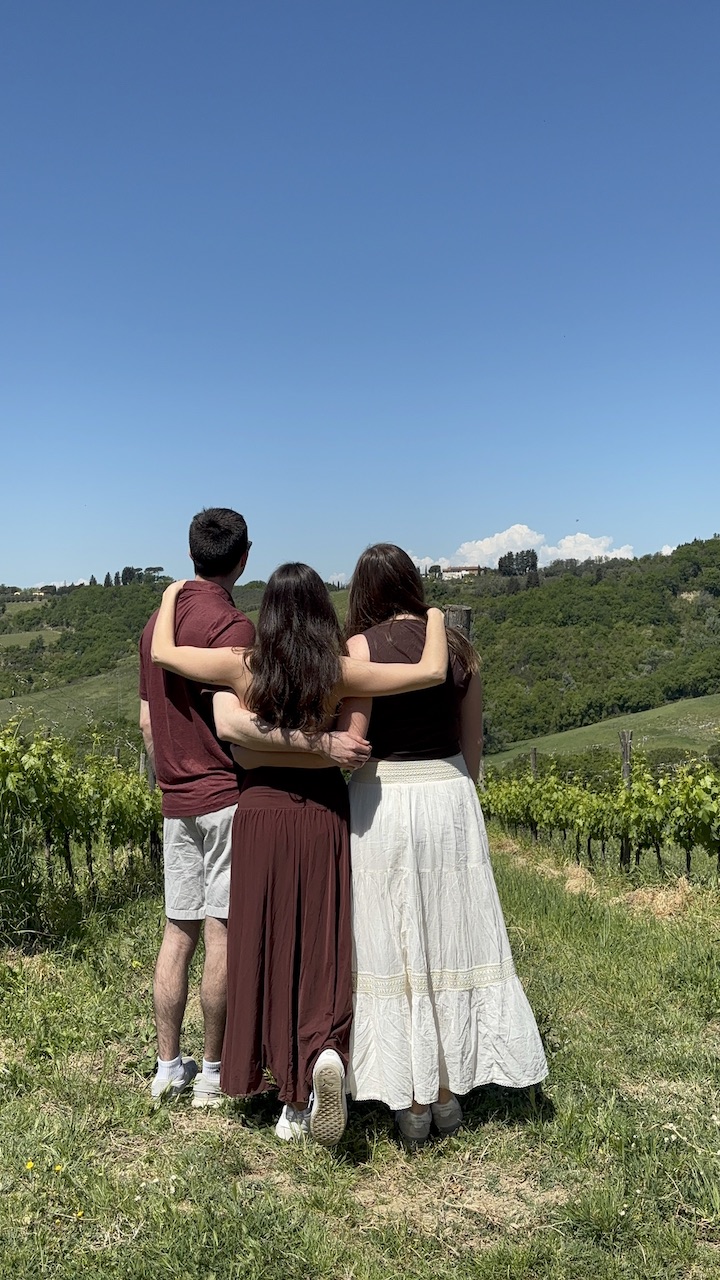
You’ve been dreaming about this trip longer than you probably realize. The hills you’ve seen in a hundred photographs. The wine you’ve ordered at nice restaurants pretending you knew what you were doing. The life that somehow looks simpler and more beautiful from the window of a stone farmhouse.
Tuscany is where people come for the trips that matter, honeymoons, anniversaries, milestone birthdays, marriage proposals on a hilltop at sunset. More Americans choose it for their honeymoon than any other destination in Europe. Those who come for a Chianti wine tour or a day trip from Florence into the Val d’Orcia tend to do the same thing: start planning the next visit before this one is over.
There is so much to do in Tuscany, and knowing where to start makes all the difference. This Tuscany travel guide covers everything, the best time to visit, how to get around without a car, which wineries to book, and what a real Tuscany itinerary looks like from day one to the last glass.
Whether you’re a first-time visitor finally making “someday” happen, planning a Tuscany honeymoon, or simply chasing the best wine tour experience of your life this is everything you need to know before you go.
Getting Here: Rome or Florence?
Most flights from the US land in Rome. If yours does, don’t panic this is actually fine. The high-speed train from Rome to Florence takes 1 hour and 20 minutes, costs around €30–50, and runs constantly throughout the day. It’s one of the most pleasant train journeys in Europe: you board in a city, you step off in another one. No connection stress, no bags in overhead compartments on a bumpy road. Book on Trenitalia or Italo a few days in advance.
If you can fly directly into Florence (FLR) do it. It’s a tiny, easy airport, and you’re in the city centre in fifteen minutes. Budget airlines from other European cities use Pisa (PSA), which is an hour from Florence by regional train and equally painless.
The short version: fly into wherever is cheapest, and take the train to Florence. Tuscany begins the moment you step off.
Getting Around: The Thing Nobody Warns You About
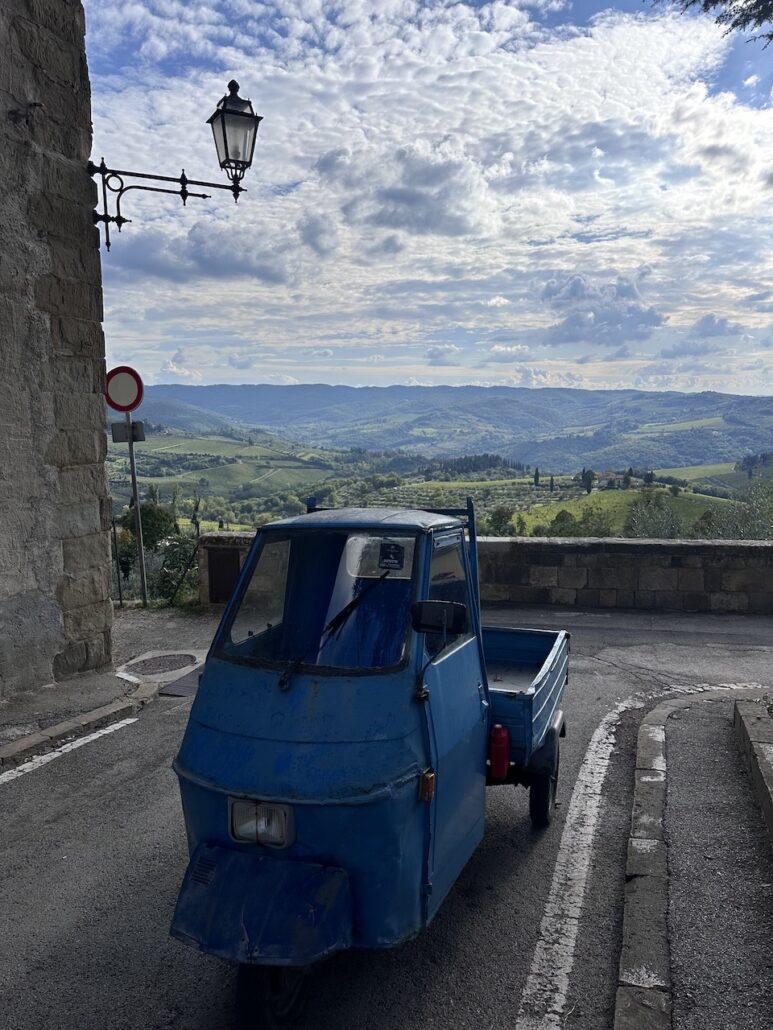
Here is the honest truth that most travel sites dance around: Tuscany has almost no public transport worth speaking of outside the cities. The Chianti hills, the Val d’Orcia, Montalcino, Montepulciano, San Gimignano the places you came for are not on train lines. The buses that exist run on schedules that make sense only if you need to be in a specific village at 7:14am on a Tuesday.
So your options are:
Rent a car. The drives are genuinely spectacular, white gravel roads through vineyards, hairpin turns with views that make you pull over just to stand there. But, parking in historic centres is a nightmare, most medieval towns have ZTL zones (restricted traffic areas where cameras automatically fine tourists who drive in), and navigating narrow roads after wine tasting is, obviously, not ideal. If you rent, stay out of Florence and Siena with the car entirely.
Book a guided tour from Florence. This is what most people who’ve actually done it well will tell you they wish they’d done from the start. A good guide takes you to wineries that don’t receive walk-ins, knows which hilltop to be on at golden hour, and crucially does the driving while you taste. You’re not on a bus with forty strangers. You’re in a small group, with someone who grew up here, going places you genuinely couldn’t find on your own.
A small group, a local guide and a genuine experience.
Worth looking at before you start piecing together an itinerary.
Best Time To Visit Tuscany
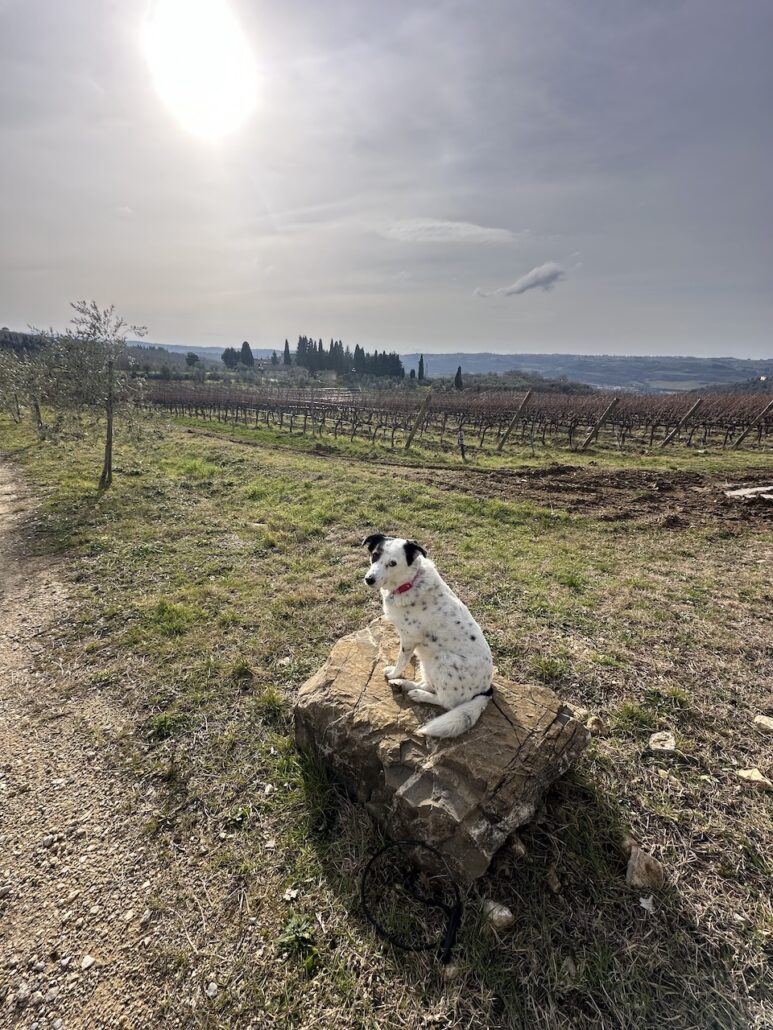
Every season in Tuscany has a case to make. Here’s the honest breakdown:
April through June are close to perfect. Wildflowers everywhere, the hills are an almost aggressively beautiful green, temperatures are warm enough to eat outside but cool enough to walk. Crowds exist but haven’t reached their summer intensity. If you’re planning a honeymoon or special occasion trip and have flexibility, this is your window.
July and August full summer. Warm. But the long evenings are magical, the outdoor festivals are in full swing, and there’s an energy that cold months can’t replicate. Go early in the morning to any major site. Book everything weeks ahead.
September and October are arguably the most atmospheric months to be in wine country. The vendemmia the grape harvest is underway. You can smell it in the air around the wineries. The light goes golden and stays that way. Crowds thin. Prices drop slightly. This is the Tuscany of your imagination.
November through March: quiet, sometimes cold, occasionally extraordinary. Truffles are in season. You’ll have the Uffizi more or less to yourself. Some rural properties close, but the ones that stay open have a warmth and intimacy that summer can’t offer.
More detail in our Best Time to Visit Tuscany guide → including what’s actually open when, and how to read the weather.
Florence: Give It More Time Than You Think
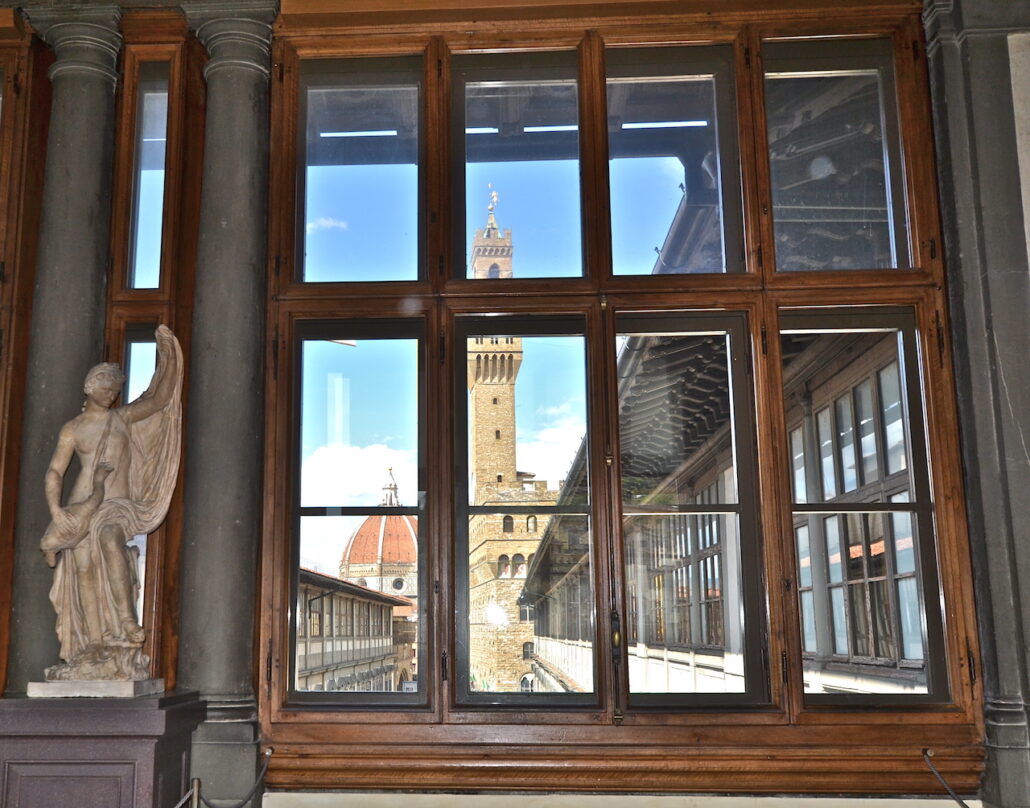
A lot of first-timers treat Florence as a one-night stopover on the way to the countryside. This is a mistake. Florence is one of the most extraordinary cities on earth the Uffizi, Michelangelo’s David, the Duomo, the Oltrarno neighbourhood where Florentines actually live. Give it at minimum two full days. More is better.
Where to Stay in Florence
A lot of first-timers treat Florence as a one-night stopover on the way to the countryside. This is a mistake. Florence is one of the most extraordinary cities on earth , the Uffizi, Michelangelo’s David, the Duomo, the Oltrarno neighbourhood where Florentines actually live. Give it at minimum two full days. More is better.
We’re putting together a dedicated Florence travel guide coming soon that goes deep on everything the city has to offer. For now: book the Uffizi and the Accademia in advance, cross the Ponte Vecchio into Oltrarno, and get to Piazzale Michelangelo at sunset with a bottle of something.
Best neighbourhoods:
For a first visit, staying in Florence and doing day trips into the countryside is almost always the right call. You have the best restaurants, the best transport connections, and you’re not dependent on a car.
Oltrarno: is my favourite neighbourhood in Florence and not just for the obvious reasons. Yes, it’s quieter, more local, full of artisan workshops and wine bars that don’t cater exclusively to tourists. But the real reason is Sunday morning. Most weekends there’s some kind of small market around Piazza Santo Spirito or the surrounding streets, farmers selling honey, dried flowers, homemade jams, handmade jewellery, natural wines, olive oils, vegan cheeses that are genuinely extraordinary, focaccia still warm. Not a tourist market. The vendors are mostly young people who left the city to farm and come back on Sundays to sell what they grew. The atmosphere is closer to a Provençal village market than anything you’d expect to find in a major Italian city. I go almost every week and always come home with something. Best for: honeymoons, anniversaries, anyone who values atmosphere over convenience and anyone who wants to see Florence the way Florentines actually live it.
Santa Croce: is lively, central, and well connected a younger crowd, good aperitivo scene, easy walking distance to the Uffizi and the Duomo. The neighbourhood takes its name from the Basilica di Santa Croce, which happens to be the final resting place of Michelangelo, Galileo, Machiavelli, Foscolo and Rossini arguably the most remarkable collection of tombs outside the Vatican. Worth an hour even if you’re not a history person. While you’re in the piazza, look up: one of the beautiful frescoed palaces facing the square belongs to the Bartolini Baldelli family, the same family behind Fattoria di Bagnolo, the Chianti wine estate we visit on our tours, which was owned by the Machiavelli family for over a century. Not open to the public, but worth stopping to look at. Florence has a way of doing that connecting dots you didn’t know existed. The area around Via dei Benci has some excellent mid range hotel options. Best for: first-timers who want to be in the middle of things without paying the full historic-centre premium.
Around the Duomo: maximum convenience, and honestly not a bad choice if museums are your priority. You wake up, step outside, and the Uffizi is a ten-minute walk. The Accademia, the same. Hotels here tend to be more expensive and the streets more crowded, especially in summer, but if you’re only in Florence for two/three nights, the location does the work for you. Just don’t expect to feel like a local.
The Places You Actually Came For
Chianti Classico and Chianti Colli Fiorentini
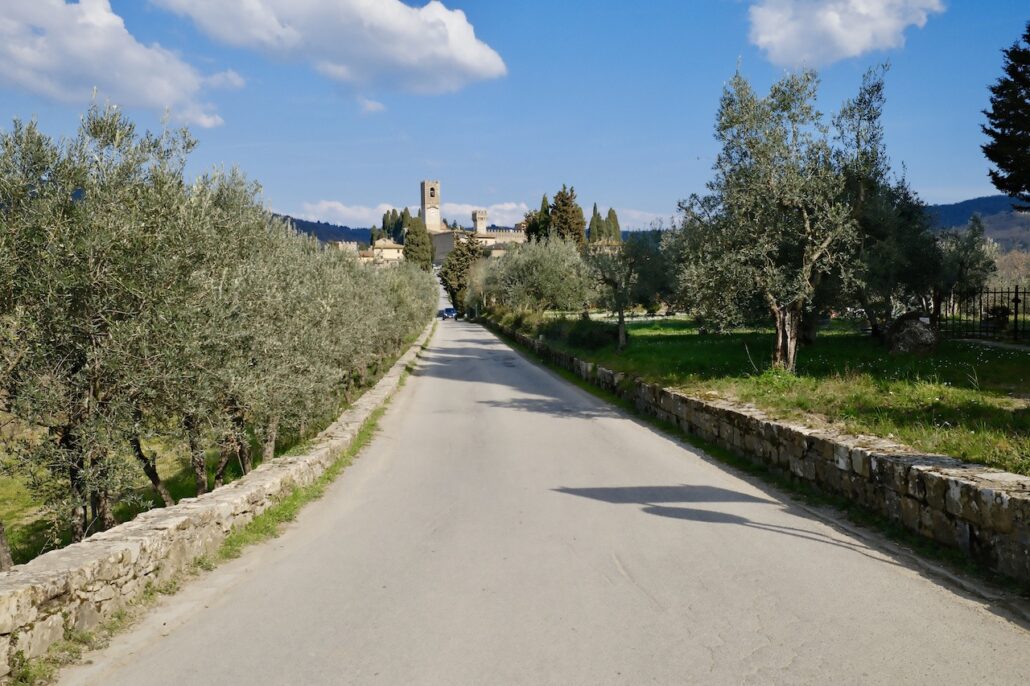
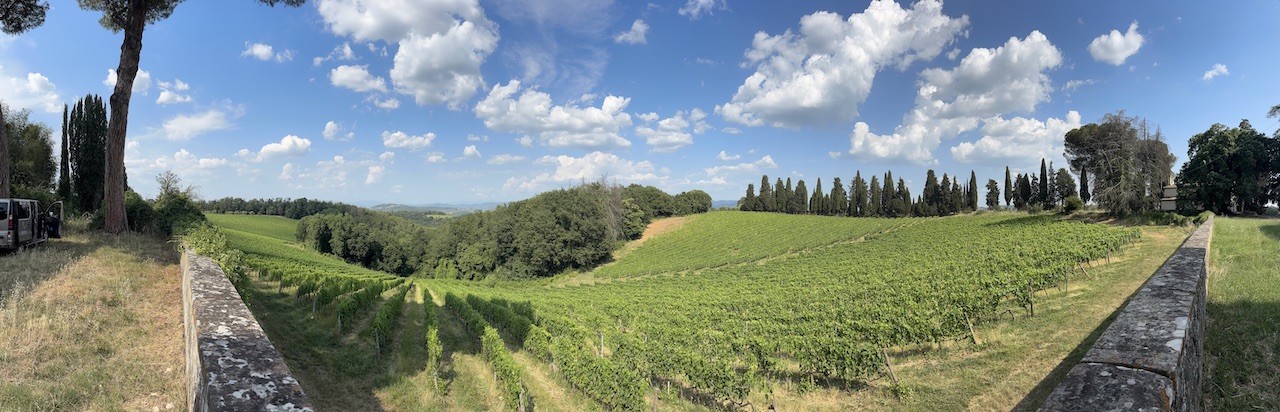
The hills between Florence and Siena are what most people picture when they picture Tuscany. They’re not wrong this is the landscape of the paintings, the calendars, the Instagram posts that made you book the flights. And it’s real. It looks exactly like that.
The wine zone is called Chianti Classico and Chianti Colli Fiorentini, and it’s one of Italy’s great appellations. The grape is Sangiovese earthy, bright with cherry and dried herbs, firm boned, made for food. At its best, it’s the kind of wine that makes you recalibrate what you thought you knew about red wine.
My connection to this landscape started by accident. I’d quit a corporate job in Milan HR director, suits, fluorescent lights and gone back to my family in Siena to figure out what to do next. A friend, Silvia, who ran an agriturismo called in a panic: she had a family from Boston arriving the following week, parents and two teenage kids, a full week touring Tuscany’s wine regions, and no guide. Could I help? I said yes before I finished the sentence. For the next two months I drove every road in these hills in my mother’s Opel station wagon, knocking on winery doors, reading everything I could find about the wine, the history, the art. That first week with the Boston family, one day in the Chianti, one day in Brunello country, San Gimignano, the Val d’Orcia was the best week of my professional life. That was twenty years ago. I’m still in touch with that family. The kids are grown now and have kids of their own.
I’ve been driving this road ever since, and it still feels like the first time.
Part of it is the wine, but the Chianti is one of the most beautiful landscapes in the world regardless of what’s in the glass. Clients who come expecting a wine tour leave having fallen in love with a place. That’s the difference.
The villages worth lingering in: Greve in Chianti (the main market town, good for stocking up on bottles), Panzano (the Golden Valley), Radda in Chianti (small, perfectly preserved, excellent views), and Castellina in Chianti.
Everything you need to know about Chianti wine
Montalcino and Brunello
South of Siena, in the hills above the Val d’Orcia, sits a small medieval town called Montalcino. From here comes Brunello di Montalcino one of the most celebrated wines in the world, aged for years before release, built to last decades in the bottle.
Tasting Brunello at the source, from a producer who can tell you about the vintage while you’re looking at the vineyard it came from, is one of those experiences that quietly changes you. It’s not about being fancy. It’s about understanding what wine can actually be.
My introduction to Montalcino happened the way the best things do by getting lost. It was 2004, early in my guiding days. A close friend and I were driving the back roads around Montalcino looking for a winery to add to my tours somewhere scenic, well-positioned, the kind of place that would stop people in their tracks. We took a wrong turn, then another, and then we spotted a long driveway lined with extraordinary iron sculptures the work of a well-known local artist, a friend of the family. We turned in.
The winery was Il Cocco di Giacomo, and Giacomo Bindi was 23 years old. He had never done a tasting for visitors in his life. But he welcomed us with a smile that filled the room, took us through his entire cellar a building dating to the 1200s and opened everything: his Brunello, his grappa, his Vinsanto. All of it, without hesitation, without asking for anything in return. He told us he’d inherited the vineyards and the cellar from his grandfather. His father was an oncologist at the hospital in Siena and it was his father who had instilled in him the commitment to biodynamic farming. Not as a trend, not as a marketing choice, but as a medical conviction: pesticides and chemicals cause cancer. An oncologist who farms without poison. It makes complete sense when you hear it said that way.
Giacomo was the only one of four siblings who felt the pull of the land, so he’d studied oenology, come back, and started making wine alone, with very little money, organic and biodynamic from day one.
Before we left I told him I was a tour operator looking for Brunello producers to work with. We’ve worked together ever since. Twenty years later, every time I put together a Brunello itinerary, he’s the first stop I book.
The town itself is easy to fall in love with a fortress with a wine bar inside it (this is real), panoramic views, and a pace that makes city life feel vaguely absurd.
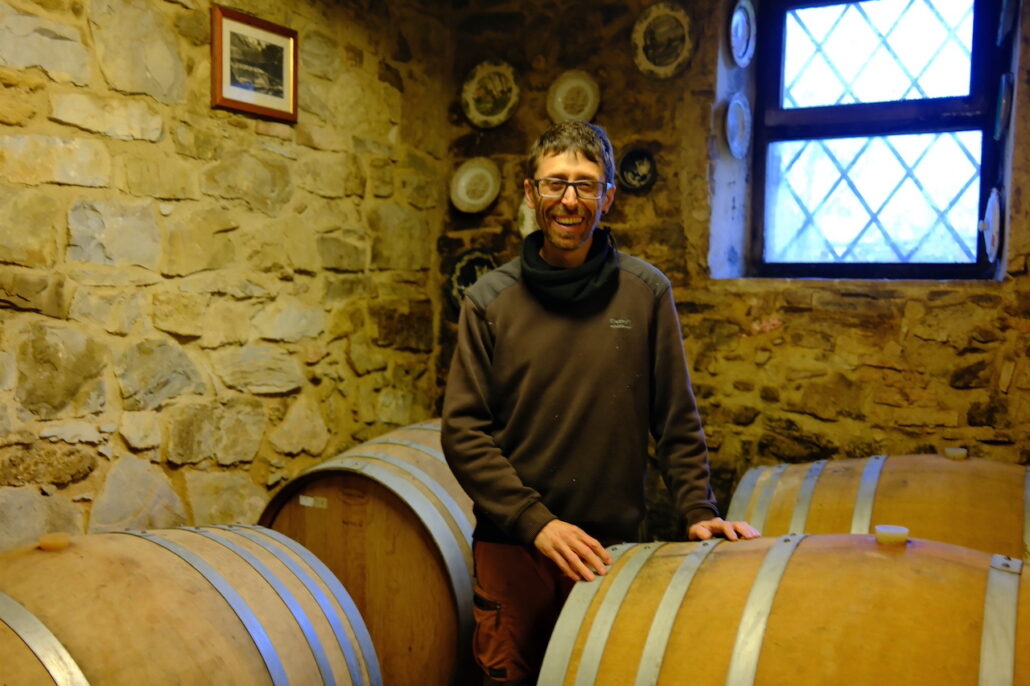
Giacomo Bindi at his biodynamic Brunello estate Il Cocco di Giacomo, Montalcino
Our full guide to Brunello di Montalcino
Montepulciano
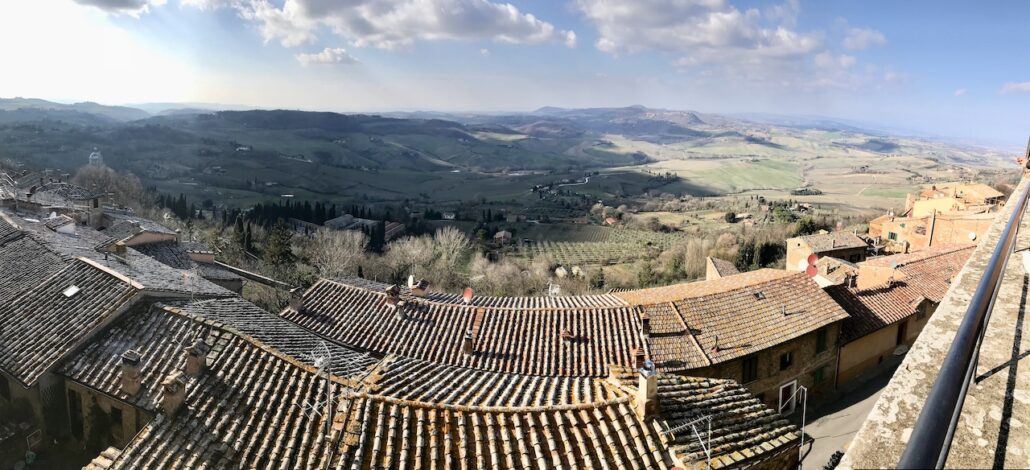
Don’t confuse it with the supermarket wine of a similar name (that’s from a different region entirely, Abruzzo). Vino Nobile di Montepulciano is a serious, underrated wine Sangiovese again, more approachable than Brunello, extraordinary value for the quality.
The town is visually dramatic in a way that even experienced Italy travellers find surprising: a long ridge with a sweeping Renaissance piazza at the very top, wine cellars tunnelled into the volcanic rock beneath the streets, views in every direction. Walking uphill to reach it earns you the first glass.
Our full guide to Vino Nobile di Montepulciano
San Gimignano
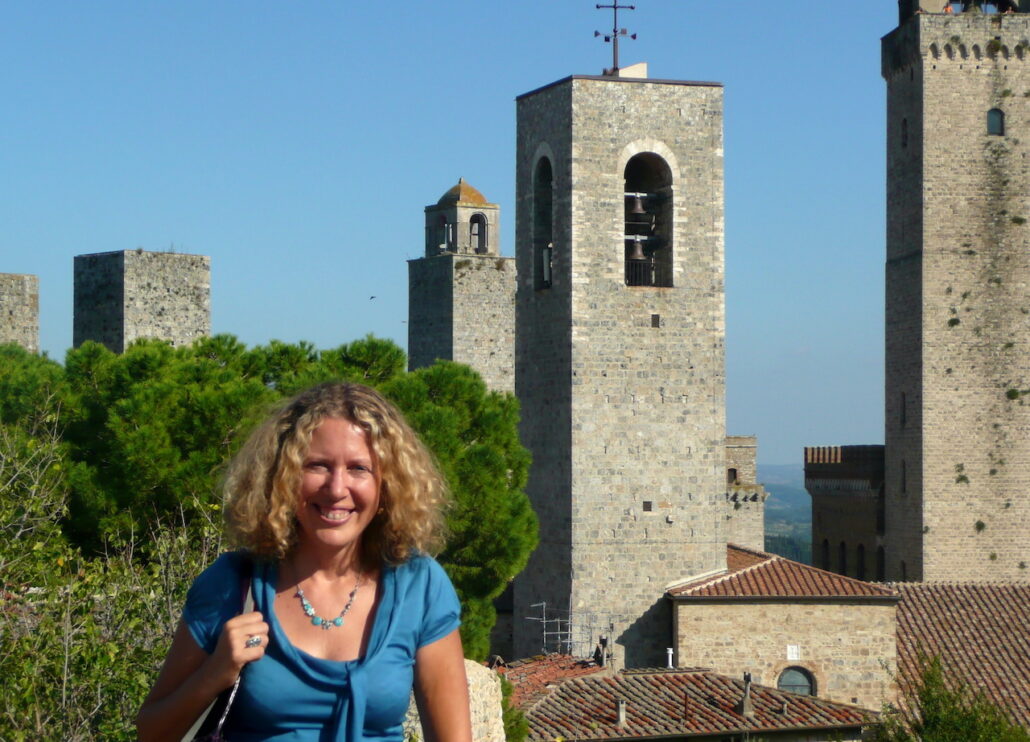
Medieval skyscrapers. That’s basically what San Gimignano is fourteen stone towers still standing from the original seventy two that powerful families built to show off their wealth in the 13th century. The taller your tower, the richer and more powerful you were so it became a race, each family trying to outbuild the next, until the town council stepped in around 1300 and passed a law: no private tower could exceed the height of the civic tower. Fourteen survived the centuries. Standing in the piazza looking up at them, you understand immediately why this place has UNESCO status.
It’s touristy (understatement) and extraordinary in equal measure. The trick: arrive before 9am, or stay until the day trippers leave after 5pm. The town transforms completely.
The wine is Vernaccia di San Gimignano the first white wine in Tuscany to receive DOCG status, and for good reason. The soil here is extraordinary: ancient seabed, dense with fossilised shells from when this part of Tuscany was underwater millions of years ago. That mineral richness comes through in the glass crisp, dry, faintly almond on the finish, with a depth that surprises people who expect a simple summer white. Best drunk cold in the shade of the piazza with a view of the towers.
I’ve been visiting the same producer here since the beginning Cappella di Sant’Andrea, a small organic estate where the Vernaccia tastes exactly like that ancient soil it grows in. It’s where I take every group, and where I’d send anyone who wants to understand what this wine can actually be.
That’s me in the photo above, early days. The towers haven’t changed.
Our full guide to San Gimignano
The Val d’Orcia
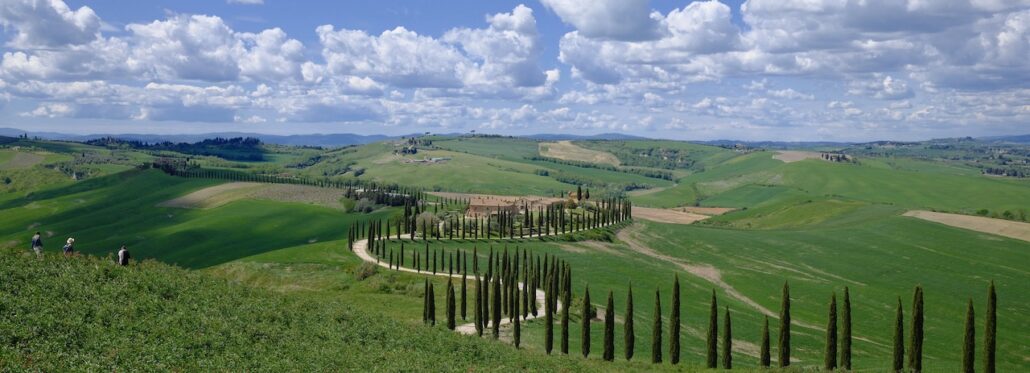
The one that stops you mid-scroll. The lone cypress trees on pale hills, the farmhouses in impossible positions, the roads that disappear into golden light. The Val d’Orcia is a UNESCO World Heritage landscape and it earns it, there’s nowhere else quite like it.
Pienza is a tiny Renaissance town built as a utopian experiment by a 15th century pope and is now one of the most perfect small towns in Italy. Bagno Vignoni has a Renaissance thermal pool at its centre instead of a piazza, which tells you something about priorities. Castiglione d’Orcia is the hilltop you want to photograph from.
This area requires a car or a guided tour, there is no other way in. Our Montalcino and Val d’Orcia day tour from Florence covers both in a single day: Brunello tasting in the morning, the Val d’Orcia landscape in the afternoon.
.
The Wines of Tuscany: What to Actually Expect in the Glass
You don’t need to be a wine expert to get a lot out of Tuscany’s wine regions. But knowing a little about what you’re tasting and why it tastes that way makes the whole experience click into place.
The backbone of Tuscan wine is Sangiovese, the great red grape of central Italy. It’s not the easiest grape to love at first sip it’s leaner than a Californian Cabernet, more acidic, less obviously fruity. But that’s exactly what makes it extraordinary with food. It’s built for the table.
Chianti Classico is your entry point and a great one. Expect flavours of sour cherry, dried herbs, a hint of leather, and firm tannins. Drink it with pasta, grilled meat, anything with tomato. The Gran Selezione tier is where it gets serious: single-vineyard wines aged longer, more concentrated, closer to Brunello territory. Price range at source: €15–25 for a good standard Chianti Classico, €40–80 for Gran Selezione.
Brunello di Montalcino is the heavyweight. More structured, more tannic, built to age for decades. A young Brunello (say, 5–8 years old) can feel a little austere grippy, tight, not immediately giving. An older one, properly cellared, is something else entirely: dried roses, tobacco, dark fruit, forest floor. If you’re tasting at a winery in Montalcino, ask if they have any older vintages open. Worth every cent. Price at source: €35–80 for a standard Brunello, €60–150+ for Riserva.
Vino Nobile di Montepulciano sits between the two, more approachable than Brunello, more serious than everyday Chianti. Excellent value. If you’re watching your budget but don’t want to compromise on quality, this is your wine. Price at source: €18–35.
Vernaccia di San Gimignano is the white crisp, dry, faintly almond on the finish. Refreshing on a hot day in a way that red wine simply isn’t. Drink it young and cold.
And then there are the Super Tuscans wines like Sassicaia and Ornellaia from the Bolgheri coast, made from Cabernet Sauvignon and Merlot rather than Sangiovese. They broke the Italian wine rulebook in the 1970s and 80s and are now among the most celebrated (and expensive) wines in the world. Not traditional Tuscany, but worth knowing about.
One practical note: rosso versions exist for both Brunello and Montepulciano , Rosso di Montalcino and Rosso di Montepulciano. Same grapes, same producers, shorter aging, lower price. A fantastic way to taste the terroir without the Brunello price tag.
Tuscany Itinerary: 5 Days or 7 Days?
5 Days in Tuscany
The right amount of time to get a genuine feel for Florence and hit two or three highlights in the countryside.
Day 1–2: Florence. Arrive, settle in, walk the city. Uffizi on day two book ahead.
Day 3: Chianti region. A full day in the wine hills.
Day 4: San Gimignano and Volterra. The towers in the morning before the crowds. Volterra an older, quieter, less visited Etruscan hilltop town in the afternoon. Completely different atmosphere.
Day 5: Val d’Orcia. Pienza for the morning (try the Pecorino cheese , it’s made here), then drive or tour through the cypress lined landscape to Montalcino for a Brunello tasting before heading back.
7 Days in Tuscany
With a week, you can breathe. Less rushing, more sitting somewhere beautiful with a glass of something good.
Day 1–2: Florence. Two proper days. Museums, Oltrarno, Piazzale Michelangelo at sunset.
Day 3: Chianti. Full immersion.
Day 4: Siena. One of the most beautiful medieval cities in Europe and criminally underrated. The Piazza del Campo, the Duomo, the narrow streets. Half day is possible; a full day is better.
Day 5: Montalcino and the Val d’Orcia. Brunello tasting in the morning, Pienza and the landscape in the afternoon. This is the day that ends with everyone quiet in the car on the way back, in the best possible way.
Day 6: Montepulciano. The dramatic ridge town, wine cellars under the streets, lunch with a view. Pair it with a stop in Cortona (yes, the Under the Tuscan Sun town) if you have time.
Day 7: Florence, slower. The neighbourhood you didn’t get to, a long lunch in Oltrarno. Leave at a human pace.
What Does a Tuscany Trip Actually Cost?
Tuscany has a reputation for being expensive, and it can be but it doesn’t have to be. Here’s an honest breakdown.
Getting around: Day tours from Florence typically run €160–280 per person for a full day including transport, guide, and wineries visit. Car rental starts around €60–80/day for a small car, plus fuel and parking (budget €10–20/day for parking).
Winery visits: A standard tasting is usually €25–40 per person. A cellar tour plus tasting is €45–55. A full wine and food pairing lunch at a winery, the experience worth splurging on runs €60–120 per person depending on the producer and the wines poured.
Restaurants: A proper trattoria lunch (two courses, wine, water) runs €25–40 per person. Dinner at a good restaurant in Florence, €50–80 per person with wine. A quick lunch panino, glass of local wine at a bar is €10–15 and often just as satisfying.
Museums: Uffizi tickets are €20–25 depending on the season. Accademia is €12–20. The Duomo complex in Florence is €20 for the combined ticket. Most smaller churches and municipal museums in Tuscany are €5–10 or free.
Coffee: Espresso at the bar is €1–1.50 almost everywhere. The moment you sit down at a table, the price doubles or triples. Stand at the bar like the locals do.
The honest overall picture: A well-planned week in Tuscany for two people Florence hotel, day tours, good restaurants, a few winery visits, museums runs roughly $4,000–6,000 all-in excluding flights. You can do it for less with more careful choices; you can easily spend more if you lean into the luxury end. The sweet spot is spending on experiences (the winery lunch, the guided tour) and being more relaxed about everything else.
Visiting Wineries: You Have to Book in Advance
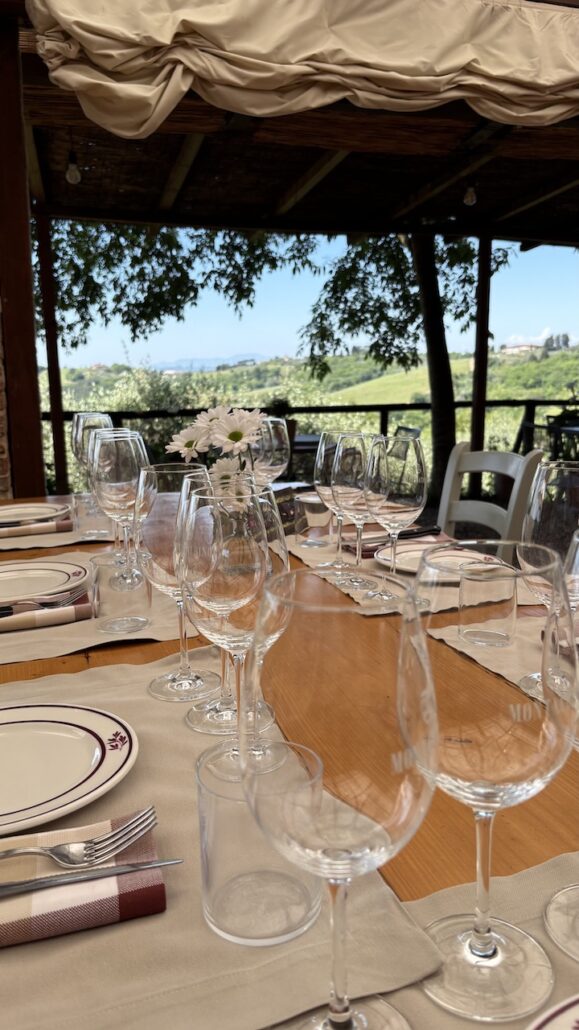
This surprises almost everyone: you cannot simply show up at a Tuscan winery and expect to taste. Most of the estates require advance bookings sometimes weeks ahead in high season. This isn’t pretension. These are working farms, often family run, with limited space and staff. A booking tells them you’re serious. What they give you in return is often extraordinary: a walk through the cellar with the winemaker, barrel samples, wines not yet released, the kind of access you can’t buy in a wine shop.
Most visits offer:
Tasting only: Three to five wines, often with local cheese and charcuterie
Cellar tour + tasting: The full behind-the-scenes experience, worth it
Wine and food pairing: A seated lunch or dinner with matched wines frequently the best value and the most memorable meal of the trip
Book directly through the winery’s website where possible. The larger estates, the ones with a reception desk, a tasting room, and staff are straightforward to book independently and worth visiting. But they’re not the whole story.
The wineries I’ve built my tours around over the past twenty years are a different category entirely. Fifteen estates, chosen one by one over decades: for the quality of the wine, for the beauty of the place, for the people making it. I spend every winter doing my homework driving back roads, knocking on doors, tasting in cellars that don’t have websites. When I find somewhere extraordinary the right wine, the right setting, the right human being behind it I ask for exclusivity. Meaning my groups are the only visitors they receive.
What that means in practice for my clients: no competing with other groups, no sharing a tasting table with thirty strangers, no waiting your turn to see the barrel room. Just you, the producer, and the wine they made poured directly by the person who grew the grapes. These are places that have been farming the same land for generations. They’re not set up for tourism. They’re set up for making exceptional wine, and they open their doors for us because we’ve been coming back for years and we treat them accordingly.
You can book a winery visit in Tuscany anywhere. You cannot find these particular places on Google. That’s the difference.
What to Wear (Seriously, Read This)
Churches are everywhere in Tuscany, and they all require covered shoulders and knees. This applies to you regardless of gender, regardless of how hot it is, regardless of how casual the church looks from outside. A lightweight scarf or a layer in your bag solves this completely. Don’t be the person turned away at the door of a 13th-century chapel because of a sleeveless top.
Your shoes matter more than your outfit. Every Tuscan historic centre is cobblestone. Every agriturismo involves some uneven ground. Hills are involved everywhere. Stylish flat shoes or quality sneakers: yes. Flip flops by midday: you will regret this. High heels: only if you’re dining somewhere and not moving much.
Layer everything in spring and autumn. Morning in the hills can be cold even when the afternoon is warm. A light jacket takes up almost no space and saves the day regularly.
For dinners at nicer restaurants: smart casual. You don’t need a jacket. But visibly beach casual tank tops, athletic shorts is out of place in the evening. Italians dress for dinner. It’s worth meeting them halfway.
Shipping Wine Home
Yes, you can bring wine back. Here’s how to actually do it.
The easiest option: check a bag specifically for wine. Purpose-made wine travel bags (available at most enotece and wine shops in Florence) cushion bottles properly. Three bottles per checked bag is a reasonable maximum. Wrap each one in clothes for extra padding.
Shipping from Italy: Most larger wine shops and enoteche in tourist areas offer international shipping, and many wineries ship directly. This is the right call for valuable bottles or larger quantities.
US customs: Federal regulations allow one liter of alcohol per person duty free roughly one standard bottle of wine. You must be at least 21, and it must be for personal use. Beyond that, there’s no hard federal limit for personal use, but additional bottles must be declared and are subject to federal duty of approximately 3% plus excise tax, modest amounts on a few bottles. Each US state also has its own laws on receiving wine shipments some states freely accept direct to consumer international shipping, others don’t. Worth checking your state’s rules before having a winery ship to your home address.
For the UK, Australia, and Canada: Generally more straightforward, though import duties apply above your personal allowance. A reputable Florentine wine merchant can handle the paperwork.
The wine you taste at a small estate in Chianti probably isn’t exported. Which is either an excellent reason to ship a case home, or an excellent reason to come back.
Tracing Your Italian Roots
If your family has Italian roots, Tuscany might hold more than just beautiful landscapes. Italy has some of the best preserved parish records in the world, baptisms, marriages, deaths going back to the 16th century, sometimes earlier. And unlike many countries, a significant portion of these records have survived intact in local churches and diocesan archives.
One of my clients came back from a visit to a small church near her family’s ancestral village and told me what had happened. The priest had taken her into the archive, pulled out the original register, and together they found her grandfather’s baptismal record the exact date, written by hand in faded ink, in a book that had been sitting on that shelf for over a century. She said she stood there and cried. I believed her completely. I would have done the same.
If this is something you want to explore, start before you travel. The Antenati portal, run by the Italian Ministry of Culture has millions of civil and parish records digitised and free to search online. You may find what you’re looking for without leaving home. Or you may find just enough to know exactly which village, which church, which archive to visit.
A few practical things to know: the more specific your starting point, the better. A surname and a region won’t get you far. A great grandparent’s full name, approximate birth year, and town of origin is something to work with. Check family documents, old letters, naturalisation papers, anything that came over with them. And if you do visit a church or archive in person, go with patience and a little Italian, most parish priests and archive staff don’t speak English, but they respond warmly to someone who has clearly come a long way to find something that matters.
A Few Last Things
Tipping: Not mandatory in Italy the way it is in the US, but leaving a few euros after a good meal is appreciated. In bars, leaving small change is normal. For an exceptional tour guide, a tip is a genuinely warm gesture.
Afternoon closings: Many smaller businesses and museums close from roughly 1pm to 3:30pm. Build this into your plans rather than fighting it, it’s an excellent excuse for a long lunch.
The coffee: Order at the bar standing up. Espresso, macchiato, or cappuccino (only at breakfast ordering cappuccino after a meal is the one thing that will make an Italian look at you with genuine pity). The ritual matters.
Say buongiorno. Every time you enter a shop, a restaurant, a winery. Every single time. It costs nothing and changes everything about how you’re received.
The Tuscany that lives in your imagination, the one that’s been there for years, assembled from films and photographs and restaurant menus and other people’s stories is real. It exists. You can go there. The wine is as good as you hoped. The light does that thing you’ve seen in the paintings. The food is quietly extraordinary in a way that makes you recalibrate what “good” means.
The only thing better than imagining it is being there.